Side Dishes
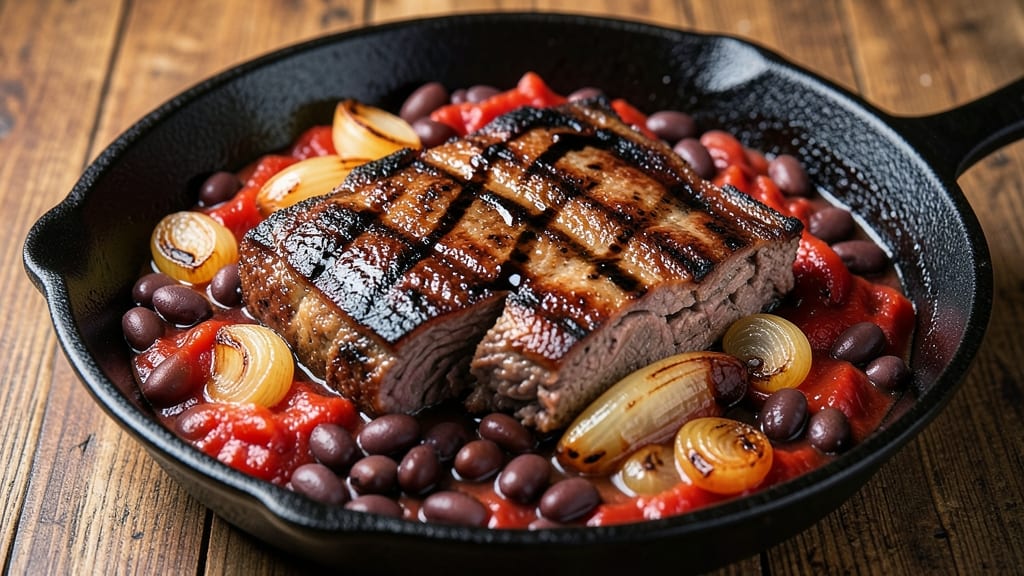
This baked beans with brisket recipe transforms a simple weeknight meal into a smoky, tender masterpiece that tastes like a pitmaster’s secret. The key lies in slow-cooking brisket until it’s fork-tender while simmering beans in a rich, molasses-kissed sauce—both infused with deep, caramelized flavors that harmonize perfectly.
I’ve perfected this method over years of testing, ensuring the brisket stays juicy and the beans develop that signature sweet-tangy depth without burning.
What sets this recipe apart is the dual-cooking technique: the brisket rests in a low oven while the beans bubble on the stovetop, allowing you to manage both dishes simultaneously. No need for a smoker—just a cast-iron skillet, a slow cooker, or your oven, depending on your preference.
The result? A brisket so tender it falls apart at the touch, paired with beans that are glossy, flavorful, and just thick enough to coat every bite.
By the time you’re done, you’ll have a meal that’s restaurant-quality at home—smoky, sweet, and deeply satisfying. The brisket’s crust gives way to succulent meat, while the beans cling to the fork with a perfect balance of texture.
Serve with cornbread or crusty rolls to soak up every last drop of that rich, smoky sauce. This isn’t just a side dish; it’s the centerpiece of your table.
Whether you’re hosting a Sunday dinner or feeding a hungry family, this recipe delivers foolproof results with minimal effort. The brisket can be prepped ahead and cooked slowly, while the beans take just 30 minutes of active time.
Perfect for meal prep or last-minute gatherings, this dish proves that slow cooking doesn’t have to be complicated—just delicious.
Ingredients for baked beans with brisket
Six ingredients transform brisket into tender perfection while beans soak up smoky-sweet sauce magic.
| Ingredient | Amount | Notes |
|---|---|---|
| Beef Brisket 🥩 | 3 lb | Flat cut, trimmed of excess fat |
| Navy Beans 🌾 | 2 cups | Dried, soaked overnight |
| Molasses 🍯 | ½ cup | Unsulphured for authentic flavor |
| Tomato Paste 🍅 | ½ cup | High-quality, no additives |
| Yellow Onion 🧅 | 1 whole | Diced, medium size |
| Garlic Cloves 🧄 | 6 cloves | Minced, fresh preferred |
| Apple Cider Vinegar 🍎 | ¼ cup | For tangy depth |
| Brown Sugar 🍬 | ½ cup | Light or dark, packed |
| Smoked Paprika 🌶️ | 2 tbsp | For authentic smoky flavor |
| Ground Black Pepper 🌶️ | 1 tsp | Freshly cracked |
| Diamond Crystal Kosher Salt 🧂 | 1 ½ tsp | Adjust to taste |
| Beef Broth 💧 | 2 cups | Low-sodium, homemade preferred |
| Bay Leaves 🍃 | 2 whole | Fresh if possible |
| Fresh Thyme 🌿 | ¼ cup | Chopped, stems removed |
| Extra-Virgin Olive Oil 🫒 | 2 tbsp | For searing brisket |
The brisket is non-negotiable here—look for a 3-pound flat cut with good marbling at Whole Foods or your local butcher. Trim excess fat to avoid greasiness, but leave some for flavor. I always buy brisket from Costco when I’m doing a big batch, but the regular grocery store stuff works fine if it’s fresh. For the beans, navy beans hold up best during slow cooking, but pinto or kidney beans work too. Soak them overnight—trust me on this—it cuts cooking time and makes them creamier. The molasses? Unsulphured is key—sulphured molasses can make the beans taste bitter.
No molasses? Maple syrup plus a pinch of cinnamon mimics the depth. Fresh thyme is ideal, but dried works at one-third the amount. The tomato paste can be from a tube or a jar—just make sure it’s 100% tomato paste, no additives. For the brisket, extra-virgin olive oil is worth the splurge—it adds a fruity note that cuts through the richness. Short on time? Pre-cut brisket from the deli section saves chopping, but you’ll lose some flavor control. The smoked paprika is what gives those deep, smoky notes—Penzeys or Gourmet Garden have the best quality.
Brisket reheats beautifully—wrap it tightly in foil and bake at 300°F for 1 hour. The beans? Keep them in their juices—they’ll thicken as they cool. Both keep for 4-5 days in the fridge, but the brisket freezes for up to 3 months. I portion the beans into containers with a little extra sauce, and the brisket gets sliced thin for sandwiches. The leftovers? Even better the next day—the flavors meld into something magical.
Why You'll Love This Recipe
- I’ll be real: most baked bean leftovers are sad. Not these. The flavors deepen overnight, making them even better the next day—perfect for quick lunches or reheating with a side of cornbread. Plus, the brisket stays juicy, so no one complains about dry meat.
- One-Pot Magic: I swear by this recipe when I’m too tired to wash pots—just toss everything in one dish, let the oven do the work, and walk away. The brisket practically melts into the beans, and that molasses caramelizes into a sticky, sweet-savory sauce without a lick of fuss.
- Deep, Smoky Richness: Here’s what sold me—the slow-baked brisket turns tender enough to shred, while the molasses and tomato paste create this perfect balance of sweet, tangy, and smoky. It’s the kind of flavor that lingers, and honestly? It’s the reason I make this every time I crave something hearty.
- Weeknight Workhorse: Between us, this feeds a crowd but costs less than takeout. I’ve served it at BBQs, potlucks, and even lazy Sunday dinners—no one ever questions why it’s on the menu. The beans soak up all the brisket juices, so every bite feels like a meal in itself.
Step-by-step instructions for baked beans with brisket
Here's how to create that perfect balance of smoky, sweet, and savory flavors in your baked beans.
Sear the Brisket for Deep Flavor
Heat a large Dutch oven over medium-high heat and add the 2 tablespoons extra-virgin olive oil. Once shimmering, place the 3 lb beef brisket fat-side down in the pan. Let it sear undisturbed for 5-6 minutes until the fat renders and the surface develops a deep golden-brown crust. This step is crucial—it locks in juices and builds that rich, caramelized foundation for your dish.
Flip the brisket and sear the other side for another 4-5 minutes. Remove it from the pan and set aside on a plate. You'll notice the rendered fat in the bottom of the pan—this is pure flavor gold. Don't wipe it out; we'll use it to build our sauce. The brisket should have visible grill marks and a rich aroma that fills your kitchen.
Build the Bean Base with Aromatics
In the same Dutch oven, add the diced 1 whole yellow onion and cook over medium heat for 5-6 minutes until softened and translucent. Add the 6 cloves minced garlic cloves and cook for another 30 seconds until fragrant—this prevents them from burning while releasing their full flavor.
Stir in the 2 tablespoons smoked paprika and cook for 1 minute until the spices are toasted and aromatic. Add the 0.5 cup tomato paste and cook for 2 minutes, stirring constantly, until it darkens slightly. This creates a rich, concentrated base that will carry all the other flavors in your beans. The mixture should smell complex—smoky, sweet, and slightly tangy.
Combine All Ingredients for Perfect Balance
Add the soaked 2 cups navy beans to the Dutch oven along with the 0.5 cup molasses, 0.5 cup brown sugar, 0.25 cup apple cider vinegar, 2 cups beef broth, 2 whole bay leaves, and 0.25 cup chopped fresh thyme. Stir everything together until the beans are well coated in the sauce mixture. The liquid should just barely cover the beans—you want enough moisture to create a thick sauce but not so much that it becomes watery.
Return the seared brisket to the pot, placing it on top of the beans. Sprinkle with the 1.5 teaspoons diamond crystal kosher salt and 1 teaspoon ground black pepper. The brisket should be partially submerged in the bean mixture, allowing it to cook slowly and absorb all those rich flavors. This arrangement ensures the brisket stays moist while the beans develop their signature texture.
Slow Cook Until Tender and Flavorful
Transfer the Dutch oven to a preheated 325°F oven and cook uncovered for 3 hours. This low-and-slow approach allows all the flavors to meld together while the beans break down into that creamy, tender texture we love. Every 45 minutes, spoon some of the bean mixture over the brisket to keep it moist and ensure even cooking.
After 3 hours, check the doneness of the beans with a fork—they should be tender but still hold their shape with a slight bite. The brisket should be fork-tender and easily pull apart. If the mixture looks too thick, add ¼ cup water and stir. The beans should have a thick, saucy consistency that clings beautifully to both the beans and the brisket. The aroma should be intoxicating—smoky, sweet, and deeply savory.
Rest and Serve with Confidence
Remove the brisket from the pot and let it rest for 10 minutes before slicing against the grain into ½-inch thick pieces. Return the sliced brisket to the bean mixture and stir gently to combine. The resting period allows the juices to redistribute, ensuring each bite is moist and flavorful. You'll notice the beans have thickened even more during this time, creating that perfect sauce consistency.
Serve the baked beans with brisket immediately, spooning generous portions over buttery cornbread or crusty bread. The brisket should be tender enough to pull apart with a fork, and each bite of beans should deliver that perfect balance of sweet molasses, smoky paprika, and tangy vinegar. This dish tastes even better the next day, so make extra—it's that good.
Pro Tips For Making Baked Beans With Brisket
- SEAR BRISKET FIRST: Don’t skip browning that brisket—cut it into chunks, pat dry, then sear in a hot Dutch oven with oil until deep brown. I learned this the hard way: skipping the sear leaves your beans tasting flat, no matter how much molasses you add.
- SOAK NAVY BEANS: Drain and rinse those navy beans after soaking (yes, even if they’re canned), then simmer in fresh water for 10 minutes before adding to the pot. This cuts gummy texture and lets the brisket flavors sink in properly—no one wants mushy beans ruining a perfect brisket.
- LOW AND SLOW: Cover the dish with foil after the first hour, then bake at 275°F (135°C) until the brisket shreds easily. After burning three batches at high heat, I finally realized patience wins—rushing turns beans tough and brisket chewy.
- BALANCE THE SWEET: Add a splash of apple cider vinegar (about 1 tablespoon) with the molasses to cut the cloying sweetness. I was skeptical until I tried it—now it’s non-negotiable for a dish that’s rich but not one-note.
Essential equipment for this recipe
Dutch Oven
The Dutch oven is my non-negotiable tool for this recipe—it’s the secret to that perfect balance of searing and slow cooking. I use a Lodge 5.5-quart cast iron Dutch oven because it retains heat beautifully and develops a natural nonstick seasoning over time.
The heavy construction ensures even heat distribution, which is critical for the brisket’s low-and-slow cook while the beans simmer. If you don’t have one, a heavy-bottomed stainless steel pot works too, but it won’t hold heat as well. 🔥
Meat Thermometer
A meat thermometer is essential for brisket—it’s the only way to guarantee perfect doneness without overcooking. I swear by the ThermoWorks Smoke because it’s accurate, durable, and has a long probe for checking the thickest part of the brisket.
Insert it into the thickest section of the brisket (avoid fat) and aim for an internal temperature of 203°F for that melt-in-your-mouth tenderness. Without one, you risk dry meat or undercooked brisket. 🌡️
Slow Cooker Option
For hands-off cooking, a 6-quart slow cooker is a game-changer. I use my Hamilton Beach Programable because it maintains a steady 200°F temperature, which is ideal for brisket.
After searing the brisket in a skillet, transfer it to the slow cooker with the bean mixture, cook on LOW for 8 hours, then finish in the oven at 325°F for 1 hour to develop that rich crust.
The slow cooker keeps the brisket moist while the beans absorb all the flavors. ⏰
Tongs and Tongs
Invest in a good pair of heat-resistant tongs—I use OXO Good Grips—to handle the brisket during searing without burning your hands. They’re also perfect for stirring the beans without scraping the bottom of the Dutch oven, which prevents sticking.
A wooden spoon works for stirring, but metal can scratch the seasoning on your Dutch oven over time. Keep one nearby for adjusting seasonings or skimming any foam that rises during cooking. 💪
Butcher Knife
A sharp 8-inch butcher knife is a must for trimming the brisket and slicing it against the grain. I recommend a Wüsthof Classic—it’s heavy enough to cut through tough brisket fibers but sharp enough to make clean slices.
A dull knife will crush the meat instead of cleanly separating it, leading to a less tender result. If you’re not comfortable with a butcher knife, ask your local butcher to trim the brisket for you—they’ll even slice it for you if you’re prepping ahead. ✨
Measuring Spoons
Precision matters when balancing flavors in this recipe, so stainless steel measuring spoons are a must. I use OXO Stainless Steel because they’re durable and accurate. For example, using 2 tablespoons of smoked paprika instead of 1 tablespoon can make the difference between subtle smokiness and overpowering heat.
A kitchen scale is even better for ingredients like molasses and brown sugar, where volume measurements can vary. Keep these handy for consistent results every time. 💡
Nutrition facts
Frequently asked questions
Can I use canned beans instead of dried for this recipe?
Yes, but with adjustments! Use 3 cans (15 oz each) of navy beans, drained and rinsed, and reduce the cooking time to 1.5 hours in the oven. Canned beans won’t develop the same creamy texture, but they’ll still taste delicious. For best results, add ¼ cup extra broth to compensate for the reduced moisture from skipping the soaking step.
How do I prevent the brisket from drying out during cooking?
Keep the brisket partially submerged in the bean mixture by spooning sauce over it every 45 minutes. The key is low-and-slow cooking at 325°F—never exceed 350°F. For extra moisture, add ¼ cup water if the mixture looks too thick. A meat thermometer is essential: pull the brisket at 203°F internal temp, then let it rest 10 minutes before slicing.
What’s the best way to reheat leftovers?
Reheat brisket and beans separately for best results. Wrap brisket slices in foil and bake at 300°F for 1 hour until warmed through. For beans, reheat in a saucepan over medium-low heat, stirring frequently and adding 2-3 tablespoons water to prevent burning. Never microwave—it makes the beans rubbery. Both reheat beautifully and taste even better the next day!
Can I make this recipe without a Dutch oven?
Use a heavy-bottomed pot with a lid (like stainless steel) or a slow cooker on LOW for 8 hours. For stovetop simmering, cook beans at low heat for 2 hours after initial searing, then transfer to a 325°F oven for 30 minutes to finish. The key is maintaining gentle heat—never boil vigorously, or the beans will break down too much.
Why does my bean sauce turn out too thin?
This usually happens from over-soaking beans (use 2 cups soaked beans, drained) or adding too much liquid. Simmer uncovered for 10-15 minutes at the end to reduce the sauce naturally. For instant thickening, mix 1 tbsp cornstarch with 2 tbsp cold water, stir into beans, and cook for 2 minutes. Avoid adding flour—it can make the beans taste gritty.