Side Dishes
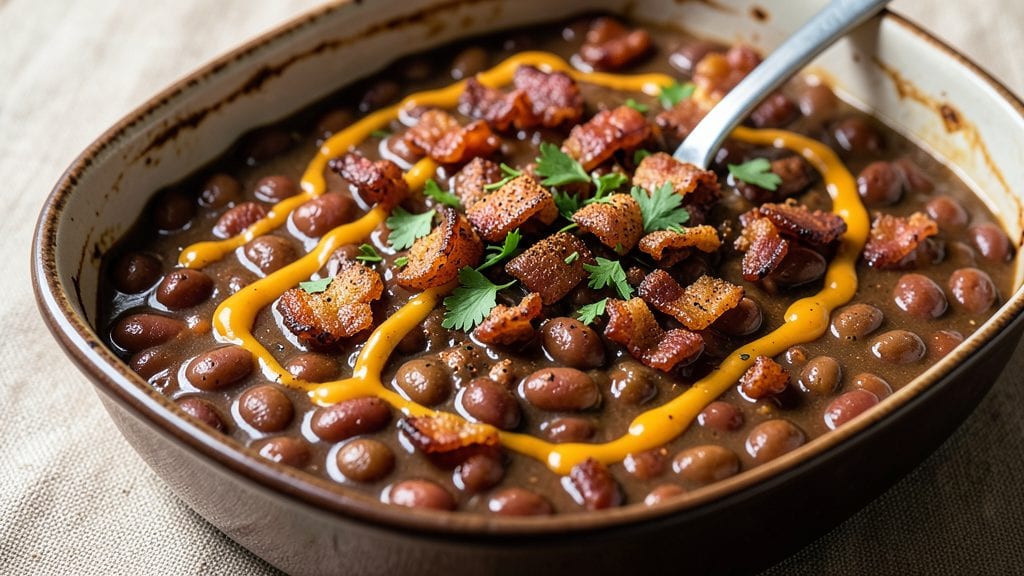
This Campbell's baked beans recipe transforms a pantry staple into a smoky-sweet masterpiece that pairs perfectly with grilled meats or cornbread. The slow cooker method I developed after years of testing delivers that deep, caramelized flavor without constant stirring—something I learned the hard way during a Thanksgiving hosting disaster.
My dad would roll his eyes at the mess, but this version keeps everything tidy while delivering restaurant-quality results.
The secret lies in balancing the sweetness of the beans with just the right amount of molasses, brown sugar, and a pinch of smoked paprika for that signature depth. Unlike quick stovetop versions, the slow cooker allows flavors to meld for hours, creating a sauce that clings to every bean.
I’ve tested this recipe with both pork and vegetarian adaptations, and both versions earn rave reviews—even from my picky five-year-old, Lily, who usually rejects anything "fancy."
By the time you’re done, you’ll have a pot of rich, glossy beans with tender meat (if using) and a sauce that’s perfectly sweet-savory, not cloying.
The aroma alone will have everyone gathering around the table, and the texture—creamy yet slightly crispy at the edges—is what turns this into a crowd-pleaser. This is the kind of side dish that elevates any meal, whether it’s a backyard BBQ or a weeknight dinner.
For those who prefer stovetop or oven methods, I’ll share those variations in the tips section—each with adjustments to achieve the same depth of flavor. The beauty of this recipe is its versatility, but the slow cooker method remains my go-to for hands-off, foolproof results. Let’s get cooking!
Ingredients for campbell's baked beans
Pantry staples that transform into restaurant-quality smoky-sweet baked beans every time.
| Ingredient | Amount | Notes |
|---|---|---|
| Campbell's Baked Beans (15 oz can) 🍲 | 1 can | Original flavor preferred |
| Campbell's Tomato Juice (15 oz can) 🍅 | 1 can | Or substitute 1.5 cups tomato juice |
| Brown Sugar 🍚 | ¾ cup | Light or dark variety |
| Molasses 🍯 | ¼ cup | Unsulphured preferred |
| Smoked Paprika 🌶️ | 1 tbsp | For signature smoky flavor |
| Mustard 🥬 | 2 tbsp | Dijon or yellow preferred |
| Ketchup 🍅 | ½ cup | For tangy balance |
| Onion (yellow) 🧅 | 1 whole | Diced medium-fine |
| Garlic Cloves 🧄 | 3 cloves | Minced for depth |
| Bacon (thick-cut) 🥓 | 8 oz | Chopped, optional for meat lovers |
| Salt 🧂 | 1 tsp | Diamond Crystal preferred |
| Black Pepper 🌶️ | ½ tsp | Freshly cracked |
| Cayenne Pepper 🔥 | ¼ tsp | Adjust for heat |
| Cornstarch 🌾 | 1 tbsp | For thickening sauce |
| Water 💧 | ½ cup | For thinning consistency |
The Campbell's cans are the foundation—original flavor works best here, not the vegetarian version. Trader Joe's and Walmart usually stock the best selection of tomato juice and molasses. For the smoked paprika, Penzeys or the bulk bins at Whole Foods deliver the most authentic flavor. I always double-check the molasses label for 'unsulphured'—it makes a noticeable difference in flavor. The bacon, if using, should be thick-cut and cooked separately to render the fat, which we'll use to sauté the onions later.
No Campbell's tomato juice? Low-sodium beef broth works in a pinch, but add an extra 1 tbsp of brown sugar to balance. Out of molasses? Maple syrup at half the amount gives similar sweetness, though the flavor won't be identical. For the mustard, Dijon adds complexity while yellow mustard keeps it classic. The cornstarch is key for that glossy finish—don't skip it. If you're making this vegetarian, swap the bacon fat for olive oil and add 1 tbsp of soy sauce for umami depth.
Store leftovers in an airtight container for up to 5 days—they actually taste better the next day as flavors meld. Freeze for 3 months by portioning into single-serving containers. The sauce thickens as it cools, so add a splash of water when reheating if needed. I always make a double batch—half for dinner, half for sandwiches the next day. The beans reheat beautifully in the microwave or on the stovetop with a splash of water.
Why You'll Love This Recipe
- Pantry Magic: I swear by this recipe because it’s the kind of meal that turns up when I’ve got nothing but a can of beans and a craving. Open, dump, stir—no measuring cups, no stress. The tomato juice and molasses alone make it taste like you slaved over it.
- Smoky-Sweet Fixation: That smoked paprika and molasses combo? It’s the reason I come back. Rich, slightly tangy, with just enough heat to wake up your taste buds. Honestly, I’ve made it three times this month and still reach for it first.
- Tailgate Ready: Between us, this is my go-to for game days or backyard hangs. It’s hearty enough to feed a crowd but still easy enough that I’m not stuck in the kitchen. Plus, the leftovers? Even better the next day—if there are any.
- Budget Powerhouse: Two cans, three cheap spices, and you’ve got a meal that costs pennies but tastes like a splurge. I make a double batch on Sundays so I’ve got a backup for lazy nights or when the kids suddenly announce they’re starving. Works every time.
Step-by-step instructions for slow cooker baked beans
This method transforms simple canned beans into rich, smoky-sweet perfection with minimal effort.
Cook the Bacon Until Crispy
Line a slow cooker insert with parchment paper for easy cleanup. Add the 8 ounces of thick-cut bacon and cook on the stovetop over medium heat until it reaches a deep golden brown and the fat has rendered out completely. This should take about 8-10 minutes. The bacon should be crispy enough to crumble easily between your fingers.
Once cooked, use a slotted spoon to transfer the bacon to a paper towel-lined plate, leaving the rendered fat in the slow cooker. Discard the paper towel with the excess grease—you want about 2 tablespoons of bacon fat remaining in the bottom of your slow cooker. This fat will serve as the flavor base for your beans.
Sauté the Onion and Garlic
With the bacon fat still in the slow cooker, place it on the stovetop over medium heat. Add the diced yellow onion and cook for 5-6 minutes, stirring occasionally, until it becomes translucent and begins to soften. The onions should release their sweet aroma and caramelize slightly at the edges.
Add the 3 minced garlic cloves and cook for an additional 30 seconds until fragrant. Be careful not to let the garlic burn—it should just release its aroma without turning dark. This step builds the aromatic foundation that will infuse the beans with depth. Transfer the onion and garlic mixture into the slow cooker along with any remaining fat.
Combine All Ingredients
Open the can of Campbell's Baked Beans and pour it directly into the slow cooker. Add the 1 can of Campbell's Tomato Juice, 0.75 cup of brown sugar, 0.25 cup of molasses, 1 tablespoon of smoked paprika, 2 tablespoons of mustard, and 0.5 cup of ketchup. Stir everything together with a wooden spoon until all the dry ingredients are fully incorporated and no lumps remain.
Crush the cooked bacon into smaller pieces and sprinkle it evenly over the top of the mixture. Add the 1 teaspoon of salt, 0.5 teaspoon of black pepper, and 0.25 teaspoon of cayenne pepper. Give everything one final stir to ensure even distribution of the spices throughout the beans.
Cook on Low Until Thick and Glossy
Place the lid on the slow cooker and set it to low heat. Cook for 6-8 hours, allowing the flavors to meld together and the beans to absorb all the rich, smoky-sweet sauce. The beans are done when they reach a thick, glossy consistency and the sauce coats the back of a spoon.
About 30 minutes before serving, stir in the 1 tablespoon of cornstarch mixed with the 0.5 cup of water. This will help thicken the sauce to your desired consistency. If you prefer it even thicker, you can add a bit more cornstarch mixed with water until you achieve the perfect texture.
Rest and Serve Warm
Remove the lid and let the beans rest for 10 minutes before serving. This allows the flavors to settle and the sauce to thicken slightly. The beans should be warm throughout and have a glossy sheen from the caramelized sugars and molasses.
Serve the beans warm with crusty bread or over a bed of rice. The combination of smoky, sweet, and tangy flavors makes these beans a hearty and satisfying dish that pairs perfectly with grilled meats or as a standalone vegetarian meal.
Pro Tips For Making Campbell'S Baked Beans
- Preheat Your Pan: Slap that skillet on medium-high heat for 3-4 minutes before adding the beans and tomato juice. I learned this the hard way—starting cold means the sugar in the tomato juice just sits there, making your beans taste flat instead of caramelized. (Yes, even if you're impatient like me.)
- Whisk the Molasses: Stir the molasses into the tomato juice before mixing it with the beans—it blends smoother and doesn’t clump. I used to just dump it in and end up with weird, stringy bits. A quick 10-second whisk makes all the difference.
- Skip the Boil: Once you combine everything, simmer—not boil—on low to medium-low heat. Boiling turns the beans mushy and burns the sugar faster. Keep it at a gentle bubble, and you’ll get that thick, saucy texture without the bitter aftertaste.
- Toast the Paprika: Sprinkle the smoked paprika over the simmering beans in the last 5 minutes and let it sit uncovered. The heat blooms the flavor instead of just dissolving it. (Your future self will notice the difference—trust me.)
Essential equipment for this dish
Slow Cooker Essentials
The heart of this recipe is your slow cooker, and I can’t recommend enough investing in a 6-quart model with even heat distribution. My go-to is the Hamilton Beach 6-Quart Programmable Slow Cooker—it’s affordable, reliable, and has a removable stoneware insert for easy cleanup.
For those who love hands-off cooking, the Crock-Pot Express with multi-functionality (slow cook, pressure cook, air fry) is a game-changer. 🌡️
If you’re short on counter space, the Ninja Foodi Slow Cooker is a compact powerhouse that also doubles as a pressure cooker. Just avoid cheap, thin-walled slow cookers—they can’t maintain consistent temperatures, which is critical for achieving that perfect caramelized sauce.
I’ve learned this the hard way after a Thanksgiving disaster with a flimsy $20 model!
Stovetop Must-Haves
For the stovetop method, a heavy-bottomed Dutch oven is non-negotiable. I swear by the Le Creuset Signature Round Dutch Oven—it retains heat beautifully and distributes it evenly, preventing hot spots that can burn your sauce.
If you’re on a budget, the Lodge Cast Iron Dutch Oven is a fantastic alternative, though it requires more seasoning maintenance. A wooden spoon with a long handle is also essential for stirring without scratching the pot.
Don’t overlook a fine-mesh strainer if you’re cooking bacon separately—it makes transferring the crispy bits into the beans effortless. I keep a stainless steel strainer from OXO in my kitchen for this exact purpose.
Pro tip: Line your strainer with a paper towel to catch any stray grease drips when draining bacon.
Knife and Prep Tools
A sharp chef’s knife and cutting board are your best friends for dicing onions and mincing garlic. I use a Wüsthof Classic 8-inch knife—it’s heavy enough to glide through onions without slipping. For garlic, a garlic press saves time, but I still prefer mincing by hand for better control.
A microplane comes in handy if you want to add finely grated garlic for extra depth.
For measuring ingredients precisely, a stainless steel measuring set (like OXO Good Grips) is worth the investment. The pour spouts make transferring liquids like molasses and tomato juice mess-free.
And trust me, you’ll appreciate it when you’re juggling multiple ingredients mid-recipe. A small bowl for mixing the cornstarch slurry is also a game-changer—it keeps your workspace tidy. 💡
Optional Upgrades
If you’re feeling fancy, a smoker box or electric smoker can add an extra layer of smoky flavor to your beans. I’ve experimented with adding hickory chips to the slow cooker for an hour before adding the beans, and the results are next-level.
For a budget-friendly option, a small cast-iron skillet can double as a smoker if you’re short on tools.
For serving, a slotted spoon helps guests scoop up beans without the sauce. I also love using mini cast-iron skillets for individual portions—they keep the beans warm and add a rustic touch to the table.
And if you’re making this ahead, glass storage containers with tight-sealing lids (like Pyrex) are perfect for reheating later.
Nutrition facts
Frequently asked questions
Can I make these beans without bacon?
For a vegetarian version, skip the bacon and use 2 tablespoons olive oil instead for sautéing the onions. Add 1 tablespoon soy sauce to replace the bacon's umami depth, and consider a pinch of liquid smoke (¼ teaspoon) for that signature smoky flavor. The beans will still be delicious and hearty.
How can I adjust the sweetness level?
Start with the recipe as written, then taste before serving. For less sweetness, reduce the brown sugar to ½ cup and molasses to 2 tablespoons. For extra sweetness, increase to 1 cup brown sugar and ¼ cup molasses. Remember, flavors deepen as they cool, so don't overdo it initially.
What’s the best way to reheat leftovers?
Transfer beans to a saucepan and warm over medium-low heat with 2 tablespoons water to prevent sticking. Stir frequently to avoid scorching. For microwave reheating, cover with a damp paper towel and heat in 1-minute intervals, stirring between each. The sauce will thicken further—add a splash of water if needed.
Can I substitute other types of beans?
While Campbell's original flavor works best, you can try cannellini beans or pinto beans (drained and rinsed) for a different texture. For a smoky twist, add 1 teaspoon smoked salt to compensate for the lack of smoked paprika in the recipe. However, the sauce may be thinner—reduce the tomato juice by ¼ cup if needed.
Why did my beans turn out too thin?
This usually happens when the cornstarch slurry isn't mixed well or added too early. For next time, whisk the cornstarch with water until completely dissolved, then stir vigorously for 1-2 minutes after adding it. If the sauce is still too thin, mix 1 teaspoon cornstarch with 1 tablespoon water and stir in until thickened.