Side Dishes
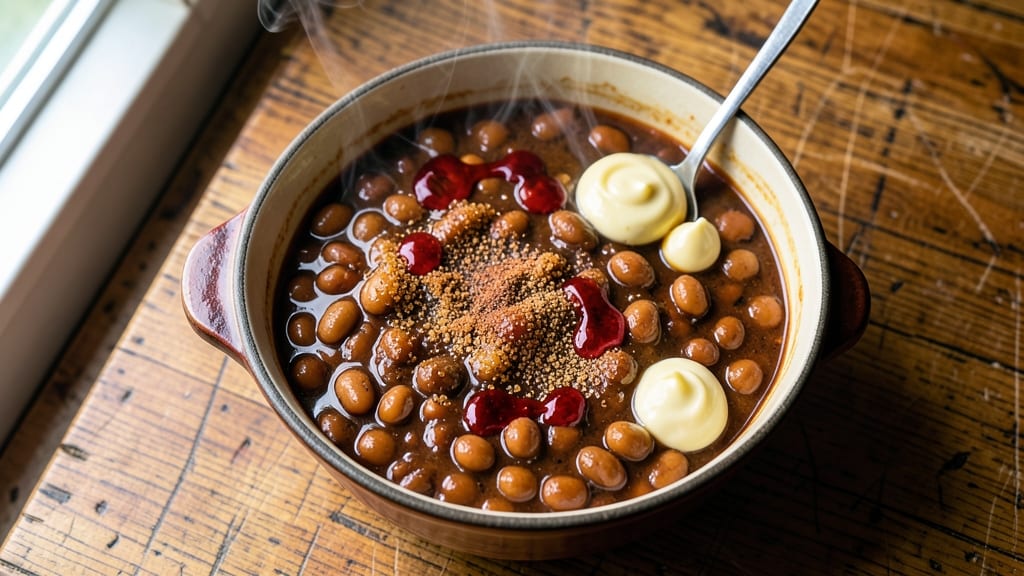
Grandma Brown's baked beans recipe is the kind of dish that transforms a simple weeknight dinner into a family gathering—smoky, sweet, and rich with the kind of slow-cooked magic that only comes from generations of kitchen wisdom. I first learned this recipe from my grandmother, who measured everything by feel and trusted the process more than the clock. The secret lies in letting the beans simmer low and slow, allowing flavors to meld into something deeper than any store-bought version could ever be.
What makes these beans special is the balance of sweetness and smokiness, achieved through a combination of brown sugar, molasses, and a touch of mustard that cuts through the richness.
My grandmother always insisted on using navy beans for their firm texture, which holds up beautifully to the long cooking time. The result? Beans that are tender yet still hold their shape, with a glossy sauce that clings to every bite.
By the time you're done, you'll have a pot of baked beans that smells like home and tastes like comfort—perfect for serving alongside cornbread, grilled meats, or even as a standalone dish when you're craving something hearty.
The best part? This recipe doesn’t require any fancy equipment, just time and patience. Let’s get cooking.
Confession: I’ve burned through more batches than I’d like to admit, but each time, the lesson was the same—slow and steady wins the race. Whether you're feeding a crowd or just treating yourself, these beans are worth every minute.
Ingredients for grandma brown's baked beans
These simple pantry staples create the hearty, smoky-sweet beans Grandma Brown perfected over decades.
| Ingredient | Amount | Notes |
|---|---|---|
| Navy Beans 🌾 | 2 cups | Dried, soaked overnight |
| Brown Sugar 🍯 | ¾ cup | Light or dark variety |
| Molasses 🍯 | ½ cup | Unsulphured preferred |
| Yellow Mustard 🌶️ | 2 tbsp | Dijon or prepared |
| Apple Cider Vinegar 🍎 | ¼ cup | Or white vinegar |
| Smoked Paprika 🌶️ | 2 tsp | For authentic smokiness |
| Ground Black Pepper 🌶️ | 1 tsp | Freshly cracked preferred |
| Salt 🧂 | 1 ½ tsp | Kosher or sea salt |
| Onion Powder 🧅 | 1 tsp | Or 1/2 cup finely chopped onion |
| Garlic Powder 🧄 | 1 tsp | Fresh minced works too |
| Bacon 🥓 | 8 oz | Cooked and crumbled |
| Water 💧 | 4 cups | For soaking and cooking |
| Vegetable Oil 🫒 | 1 tbsp | For sautéing onions |
| Fresh Parsley 🌿 | ¼ cup | Chopped, for garnish |
The beans are non-negotiable—Grandma swore by navy beans for their firm texture that holds up through hours of slow cooking. Most grocery stores carry them in the canning aisle or bulk section. Bob's Red Mill or Great Northern are solid brands, but any dried navy beans will work. Soak them overnight in plenty of water (I use a big bowl) to cut down on cooking time. The bacon? Thick-cut, applewood-smoked if you can find it—it adds extra depth. I usually grab mine from the deli counter at Kroger or Costco for a bulk pack. The molasses and brown sugar are what give these beans that signature sweetness, so don't skimp. Grandma's Pantry molasses has the richest flavor, but any unsulphured variety works.
No molasses? Maple syrup at half the amount gets you close, though it won't be quite as deep. Short on bacon? Smoked sausage or even extra smoked paprika adds that smoky kick. The mustard is key—it cuts through the sweetness and adds tang. Dijon mustard has more complexity, but prepared mustard works in a pinch. For the vinegar, apple cider gives the best flavor, but white vinegar is fine. The spices? Penzeys or the bulk bins at natural food stores have the best quality, but regular grocery store brands work too. Fresh parsley isn't required, but it adds a bright finish. Dried works at one-third the amount if you're in a hurry.
These beans taste even better the next day—Grandma always said patience was the secret. Store leftovers in an airtight container in the fridge for up to 5 days. They freeze beautifully too—portion into containers for easy lunches later. I like to make a double batch so we have leftovers for sandwiches. The sauce thickens as it cools, so a splash of water or broth thins it out if needed. Reheat gently on the stove with a little extra water to loosen the bottom. Trust me, the first bite after reheating is worth the wait.
Why You'll Love This Recipe
- One-Pot Wonder: I swear by this recipe because it’s literally dump-and-bake. Soak the navy beans overnight (or use canned to cut that step), then toss everything—brown sugar, molasses, mustard, vinegar—into one pot. No chopping, no fuss, just 2-3 hours of hands-off baking while you do whatever else needs doing.
- Sweet-Savory Magic: The molasses and brown sugar give these beans that deep, caramelized richness, but the yellow mustard and apple cider vinegar cut through it just enough to keep it bright. It’s like a hug in a bowl—sweet, tangy, and just a little smoky from the slow baking. Honestly, I’ve tried store-bought versions, and none compare.
- Tailgate or Tuesday: This recipe works everywhere. Pack it in a thermos for a football game, serve it alongside grilled sausages at a summer barbecue, or just heat up a portion for a lazy weeknight dinner. Between us, it’s my go-to when I’m feeding a crowd but don’t want to slave over the stove.
- Budget-Friendly Leftovers: Navy beans are cheap, and this recipe stretches far—easily feeds six but tastes just as good reheated the next day. I’ll be real: I’ve had these for breakfast (yes, with eggs) and they never disappoint. Plus, the sweet-savory flavor actually improves after sitting overnight, so you’re not stuck with sad, dry beans.
Step-by-step instructions for grandma brown's baked beans
Here's how to make these smoky-sweet beans that'll have everyone asking for seconds.
Prepare the Beans and Cook the Bacon
Start by soaking the 2 cups of navy beans overnight in the 4 cups of water. I like to use a large bowl and cover them completely with water, then let them sit on the counter. In the morning, drain and rinse them thoroughly under cold water - this removes any impurities and gets them ready for cooking.
While the beans soak, cook the 8 oz bacon in a large skillet over medium heat until crispy. Drain on paper towels and crumble the bacon into small pieces. Don't skip this step - the bacon adds that deep, smoky flavor that makes these beans special. Reserve the bacon fat in the skillet for sautéing later.
Sauté the Aromatics and Combine Ingredients
In the same skillet with the bacon fat, heat the 1 tablespoon of vegetable oil over medium heat. Add the 1 teaspoon of onion powder and 1 teaspoon of garlic powder, stirring constantly for about 30 seconds until fragrant. This step builds the flavor foundation for your beans.
In a large Dutch oven or heavy pot, combine the drained navy beans, 0.75 cup of brown sugar, 0.5 cup of molasses, 2 tablespoons of yellow mustard, 0.25 cup of apple cider vinegar, 2 teaspoons of smoked paprika, 1 teaspoon of ground black pepper, and 1.5 teaspoons of salt. Stir everything together until the beans are well coated with the sauce mixture.
Add Bacon and Simmer Slowly
Transfer the bean mixture to the skillet with the sautéed aromatics and stir well to combine. Add the crumbled bacon and mix thoroughly. Pour in just enough water to barely cover the beans - about 1 cup should do it. The beans should be mostly submerged but not drowning in liquid.
Bring the mixture to a gentle boil, then reduce heat to low. Cover and let it simmer for about 2 hours, stirring occasionally. You're looking for the beans to become tender and the sauce to thicken. If it gets too dry, add a splash of water - but don't overdo it, we want that thick, saucy texture.
Finish and Serve
After 2 hours, check the beans for doneness. They should be fork-tender with no hard centers. If they need more time, continue simmering uncovered for another 15-30 minutes, stirring occasionally. The sauce should be thick and glossy, coating the beans completely.
Once the beans are perfect, stir in the 0.25 cup of chopped fresh parsley. This adds a bright, fresh finish that cuts through the richness. Taste and adjust seasoning if needed - sometimes you need a little more salt or vinegar to balance the sweetness. Serve warm with cornbread or crusty rolls for the ultimate comfort meal.
Pro Tips For Making Grandma Brown'S Baked Beans
- SOAK BEANS OVERNIGHT: I learned this the hard way—rushing the soak with navy beans leads to tough, mealy results. Skip the quick-soak hacks; let them sit in cold water for 12+ hours, then drain and rinse. Your beans will stay creamy and absorb that molasses-sweet sauce like a dream.
- STIR THE MOLASSES FIRST: Molasses sinks like a stubborn guest at a party. Whisk it into the brown sugar and vinegar before adding liquids—this ensures even distribution. I used to dump it in last and ended up with clumpy pockets of bitterness. Stir it in early, and the flavor blends smoothly.
- WATCH THE MUSTARD HEAT: Yellow mustard burns faster than you’d think, especially when mixed with sugar. Keep the oven at 325°F (not 350°F) and tent the dish with foil for the first 45 minutes. After that, you can uncover it—just don’t rush the slow simmer or you’ll end up with a sad, bitter glaze.
- USE LESS BROWN SUGAR: This is the thing that matters most—Grandma Brown’s recipe probably calls for a full cup, but navy beans soak up sweetness like a sponge. Start with ¾ cup and taste as you go. You can always add more, but you can’t take it out. Trust me, I’ve tried.
Common mistakes when making perfect results
Skipping the Soak
I’ve made this mistake more times than I’d like to admit—skipping the overnight soak and expecting the beans to soften in the same time. Navy beans need that long soak (at least 8 hours) to break down their tough skins.
Without it, you’ll end up with mushy, split beans that turn to paste instead of holding their shape. If you’re in a hurry, use canned navy beans (drained and rinsed) and add them to the pot after 30 minutes of simmering.
Just don’t skip the soak for dried beans—it’s non-negotiable for texture. 🌾
Overcrowding the Pot
Nothing ruins a batch faster than overcrowding the beans in the pot. If your Dutch oven is too small, the beans won’t have room to simmer properly, and the sauce will turn watery. I learned this the hard way when I doubled the recipe without checking my pot size.
The fix? Use a 6-quart Dutch oven or a heavy pot with at least 2 inches of headspace between the beans and the lid. If you’re making a big batch, cook it in two separate pots—trust me, your beans (and your patience) will thank you. ⚠️
Ignoring the Slow Simmer
Rushing the simmering time is a surefire way to end up with beans that are either undercooked or mushy. Grandma Brown’s recipe relies on that 2-hour slow simmer to develop the flavors and tenderize the beans just right.
If you crank the heat up high, the beans will toughen instead of soften, and the sauce will never thicken properly. Keep the heat at a gentle simmer—you should see just a few tiny bubbles breaking the surface.
Patience here is key; there’s no shortcut to that smoky-sweet magic. ⏰
Forgetting to Stir
Stirring occasionally isn’t just about mixing—it prevents the beans from sticking to the bottom and burning. I once walked away for just 10 minutes and came back to find a crispy, stuck-on layer of beans that took 20 minutes of scrubbing to remove.
Stir every 15-20 minutes, especially in the first hour when the beans are most prone to sticking. If you’re worried about burning, add a splash of water or broth to keep the pot moist. A wooden spoon works best—it won’t scratch your pot like metal utensils. 🔥
Over-Sweetening the Sauce
The molasses and brown sugar give these beans their signature sweetness, but too much can make them cloying. I’ve ruined a batch or two by doubling the sugar without adjusting the vinegar or mustard.
The key is balance: start with the 0.75 cup brown sugar and 0.5 cup molasses, then taste as you go. If the sauce tastes too sweet, add a splash of apple cider vinegar or a pinch of smoked paprika to cut through it.
Trust your taste buds—they’ll guide you better than the recipe. 🍯
Skipping the Parsley Finish
This one might seem minor, but the fresh parsley at the end is what elevates these beans from "good" to "grandma’s special." I’ve served these beans without it, and while they’re still delicious, they lack that bright, fresh finish that cuts through the richness.
Add the 0.25 cup chopped parsley in the last 5 minutes of cooking, and don’t skip it—it’s the little details that make all the difference. If you’re out of parsley, a pinch of dried parsley (about 1 teaspoon) works in a pinch, but fresh is always better. 🌿
Nutrition facts
Frequently asked questions
Can I use canned beans instead of dried?
Yes, but with a few adjustments! Use 2 (15 oz) cans of navy beans (drained and rinsed) and add them to the pot after 30 minutes of simmering. You'll need to reduce the water by 1 cup since canned beans don't absorb liquid the same way. The texture will be slightly softer but still delicious.
How can I make these beans vegetarian?
Swap the bacon for 1/2 cup smoked paprika plus 1 tbsp liquid smoke for that smoky depth. Add 1/2 cup vegetable broth instead of water and consider a pinch of nutritional yeast for umami. The molasses and mustard will still give that signature flavor, just without the meat.
Why does my sauce turn watery?
This usually happens from overcrowding or too much liquid. Use a 6-quart Dutch oven with 2 inches of headspace and start with just enough water to barely cover the beans. If it gets watery during cooking, simmer uncovered for 10-15 minutes to reduce the liquid. Never add thickeners like flour - it'll make the sauce taste off.
Can I make these in a slow cooker?
Follow the same steps but transfer everything to your slow cooker after sautéing the aromatics. Cook on low for 6-7 hours or high for 3-4 hours. The slow cooker's gentle heat actually enhances the smoky-sweet flavors. Just stir occasionally to prevent sticking.
What's the best way to reheat leftovers?
Gently reheat on the stove with a splash of water or broth to loosen the sauce. Cover and heat over low-medium heat for 5-10 minutes, stirring occasionally. Microwaving can make the sauce watery - it's not recommended. Never reheat from frozen without thawing first.