Side Dishes
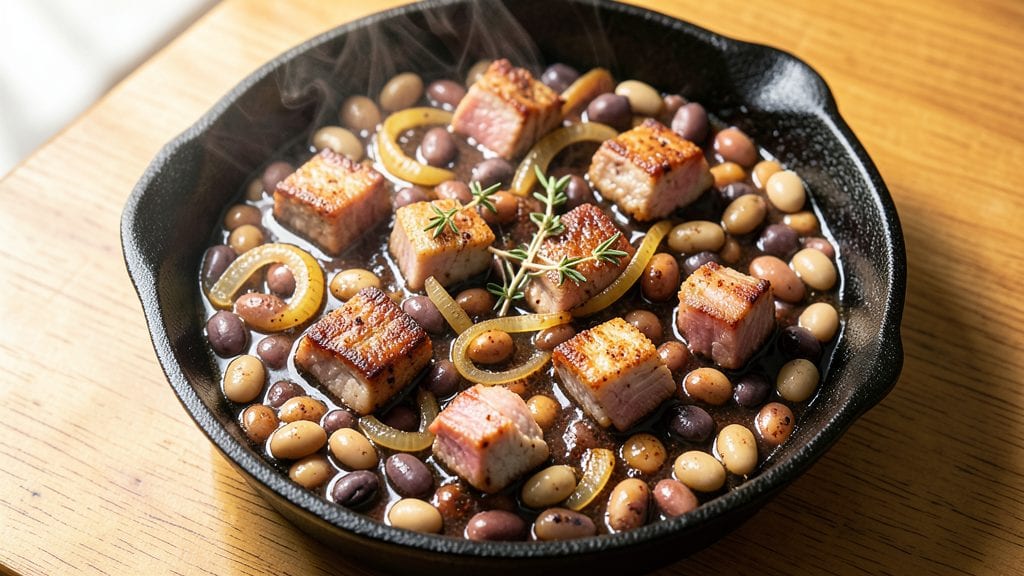
This Grandma's Boston baked beans recipe brings comfort food tradition to your table with its signature smoky-sweet flavor that's been passed down through generations. The slow-cooked magic happens when navy beans, pork, and molasses simmer together for hours, developing deep caramelized notes and tender textures that make every bite irresistible.
My grandmother's version always had the neighbors asking for seconds—now you can recreate that same homey satisfaction in your own kitchen.
The secret to authentic Boston baked beans lies in the balance of ingredients and patience. A proper slow cook transforms tough beans into creamy, flavorful bites while developing that signature smoky aroma from the molasses and spices.
Unlike quick versions, this recipe requires time—typically 6 to 8 hours—to achieve that perfect harmony of sweet, smoky, and savory flavors that define New England comfort food. The pork adds richness, while the molasses provides that unmistakable caramel depth that makes these beans legendary.
What you'll end up with is a rich, saucy bean dish that's perfect as a side for barbecues, holiday meals, or even as a hearty main dish when paired with cornbread.
The beans will be tender yet hold their shape, swimming in a glossy sauce that's sweet without being cloying, and smoky without overpowering. This isn't just a recipe—it's a taste of home, a dish that brings people together around the table and makes every meal feel special.
While traditional recipes call for pork, you can easily adapt this for vegetarian diets by using smoked tofu or mushrooms for depth. The key remains the same: slow cooking transforms simple ingredients into something extraordinary.
Let's get started on creating this timeless family favorite that will become your new tradition too.
Ingredients for grandma's boston baked beans
Simple pantry staples transform into legendary smoky-sweet beans that taste like home.
| Ingredient | Amount | Notes |
|---|---|---|
| Navy Beans (Dry) 🍲 | 2 cups | Rinsed before soaking overnight |
| Pork Shoulder (Bone-In) 🐷 | 2 lb | Cut into 1-inch cubes |
| Unsalted Butter 🧈 | ½ cup | Full-fat for richness |
| Molasses 🍯 | ½ cup | Dark, unsulphured preferred |
| Brown Sugar 🍬 | ½ cup | Packed firmly |
| Yellow Onion 🧅 | 1 whole | Medium, chopped |
| Garlic Cloves 🧄 | 4 cloves | Minced for aromatic depth |
| Mustard (Dijon) 🍴 | 1 tbsp | For tangy balance |
| Ground Black Pepper 🌶️ | 1 tsp | Freshly cracked |
| Ground Cloves 🌿 | ¼ tsp | Whole cloves crushed |
| Bay Leaves 🍃 | 2 whole | Fresh preferred |
| Apple Cider Vinegar 🍏 | 1 tbsp | For subtle tang |
| Kosher Salt 🧂 | 1 ½ tsp | Diamond Crystal preferred |
| Water 💧 | 4 cups | Filtered preferred |
The navy beans are the heart of this dish—dry beans develop deeper flavor than canned, but if you're short on time, no-salt-added canned beans work in a pinch (drain and rinse thoroughly). For the pork, bone-in shoulder adds richness and keeps the beans moist during slow cooking. I always grab mine from Costco when I'm making a big batch, but any well-marbled cut works. The molasses? Unsulphured is key—it won't overpower the natural sweetness of the beans. Look for dark, thick molasses at the back of the baking aisle, not the thin, watery kind near the syrup.
No pork? Smoked tofu or mushrooms add depth—just increase the soy sauce by 1 tbsp if using tofu. Running out of molasses? Maple syrup at half the amount works, though purists will notice the difference. The Dijon mustard can be swapped for yellow mustard at double the amount, but you'll lose some complexity. Fresh bay leaves make all the difference—dried works at one-third the amount, but I always grab a bouquet from Trader Joe's when I see it. The brown sugar should be packed firmly—light brown sugar won't caramelize as nicely. For extra smokiness, add a quarter tsp of smoked paprika if you're feeling adventurous.
These beans taste even better the next day as the flavors meld. Store in an airtight container in the fridge for up to 5 days, or freeze portions for 3 months. I like to portion them into mason jars—they reheat perfectly in the microwave and make great lunches. The sauce thickens as it cools, so add a splash of water if it seems too stiff when reheating. For serving, a sprinkle of fresh parsley brightens up the dish, though Grandma always skipped it—she said 'the beans should speak for themselves.'
Why You'll Love This Recipe
- One-Pot Magic: I swear by this—just toss everything in one pot, let it simmer, and walk away. No fancy techniques, no last-minute prep. The pork shoulder practically falls off the bone while the beans soak up all that molasses-sweetened goodness.
- Molasses Kiss: That deep, caramelized molasses and brown sugar combo? It’s what turns this from a side dish into the star. The butter melts into the beans, making each bite rich and velvety—like a hug in a bowl.
- Leftovers Heaven: This recipe doubles as tomorrow’s lunch. The flavors only get better after sitting overnight, and reheating takes no effort. Pack it for work or freeze portions—it’s my go-to for lazy days.
- Budget-Friendly Feast: Dry navy beans and pork shoulder stretch this meal across multiple servings without breaking the bank. Honestly, it’s one of those rare recipes where you end up with more than you started, and everyone’s happy.
Step-by-step instructions for Grandma's Boston baked beans
This slow-cooked treasure delivers rich, smoky-sweet flavors that'll have everyone asking for seconds.
Soak and Prepare the Beans
Place the 2 cups navy beans in a large bowl and cover them completely with cold water. Let them soak overnight—this ensures even cooking and prevents that tough, dry texture we're all trying to avoid. I like to soak them in the refrigerator to keep them fresh.
After soaking, drain and rinse the beans thoroughly under cold water. Transfer them to a large Dutch oven or heavy pot—they need space to expand as they cook. This initial prep makes all the difference in achieving that creamy, fall-apart texture that defines authentic Boston baked beans.
Sear the Pork Shoulder for Depth of Flavor
Cut the 2 lb pork shoulder into 1-inch cubes, leaving the bone in for extra flavor. Heat the Dutch oven over medium-high heat and add the pork in batches, allowing each batch to brown deeply on all sides before removing to a plate. This searing step creates a rich, caramelized crust that infuses the beans with incredible depth.
Once all the pork is browned, remove it from the pot and set aside. You should have about 4 cups of browned pork fat in your pot—this golden liquid is the foundation of your sauce. If you don't have enough fat, add 2 tablespoons of the unsalted butter to the pot to help build flavor.
Build the Sweet-Savory Sauce
In the same pot with the pork fat, add the chopped yellow onion and minced garlic cloves. Cook over medium heat for 5 minutes until the onions are translucent and the garlic is fragrant. This aromatic base forms the flavor backbone of your beans.
Stir in the 0.5 cup molasses, 0.5 cup packed brown sugar, 1 tablespoon Dijon mustard, 1.5 teaspoons kosher salt, 1 teaspoon ground black pepper, 0.25 teaspoon ground cloves, and 2 whole bay leaves. Pour in the 4 cups water and bring everything to a gentle simmer. The mixture should smell rich and complex—like caramelized sweetness with a hint of spice.
Combine and Slow Cook
Return the browned pork to the pot and add the soaked navy beans. Stir gently to combine everything. The beans should be completely submerged in the liquid—if not, add a little more water. Bring the mixture to a boil, then reduce heat to low, cover, and let it simmer gently for 3 hours.
After 3 hours, stir in the 0.5 cup unsalted butter and 1 tablespoon apple cider vinegar. The butter adds richness while the vinegar brightens the flavors. Continue simmering uncovered for another 30 minutes, stirring occasionally, until the beans are tender and the sauce has thickened to a glossy consistency. You'll know they're done when the beans are fork-tender and the sauce coats the back of a spoon.
Rest and Serve
Remove the bay leaves and let the beans rest for 10 minutes before serving. This resting period allows the flavors to meld completely and the sauce to thicken further. The beans should be perfectly tender with a creamy texture, and the pork should be fall-apart tender.
Serve the beans warm, perhaps with some crusty bread or cornbread to soak up that delicious sauce. The perfect balance of sweet, smoky, and savory flavors makes these beans a true crowd-pleaser that'll remind everyone of Grandma's kitchen.
Pro Tips For Making Grandma'S Boston Baked Beans
- Brown the Pork First: Skip straight to simmering and you’ll end up with bland beans. Sear the bone-in pork shoulder in a hot Dutch oven until it hits 160°F—it renders fat that caramelizes into the sauce, not just grease you’ll have to scrape out later. (Yes, it takes 10 minutes, but your beans will taste like you spent all day.)
- Soak Beans Overnight: I learned this the hard way—rushing the soak means gummy beans and a sauce that fights for moisture. Cover dried navies in cold water for 12 hours, then drain. The extra step guarantees tender texture and lets the molasses shine instead of fighting a waterlogged base.
- Stir the Molasses: Pouring molasses straight into the pot and walking away? That’s how you end up with sugar clumps at the bottom. Whisk it into a cup of hot liquid first—just a splash of broth or water—until it’s fully dissolved before adding it to the beans. Smooth sauce = happy grandma.
- Cover Tightly After 2 Hours: The first two hours of cooking are when the beans release starch like crazy. If you leave the lid loose, you’ll end up with a gloppy mess instead of that glossy, thick coating on every bean. Press foil directly onto the surface—no gaps—and resist peeking. (I know, I know, but trust the process.)
Essential equipment for grandma's boston baked beans
Dutch Oven Essentials
Your Dutch oven is the workhorse of this recipe—it needs to be heavy enough to distribute heat evenly and retain moisture. I use a Lodge 5.5-quart cast iron Dutch oven because it handles the slow simmer perfectly and develops a natural nonstick patina over time.
If you don't have cast iron, a stainless steel Dutch oven like the All-Clad works too, though it may require slightly more attention to prevent sticking. Avoid aluminum—it reacts with acidic ingredients like vinegar and can alter flavors.
For the best results, preheat your Dutch oven on the stovetop before adding ingredients. This helps create that initial sear on the pork and prevents temperature fluctuations during cooking. If you're using a slow cooker instead, transfer everything after searing the pork in a separate skillet.
The 6-quart size is ideal for this recipe—any smaller and the beans won't have enough room to expand properly. 🔥
Slow Cooker Upgrade
A 6-quart slow cooker makes this recipe effortless, especially on busy days. I recommend the Hamilton Beach 6-Quart Programmable Slow Cooker—it maintains consistent temperatures and has a removable stoneware insert that's easy to clean.
For even better results, use the "high" setting for the first 4 hours, then switch to "low" to finish cooking. The key difference from stovetop cooking is that you won't get that deep caramelization from the pork fat, but the slow cooking still develops incredible depth of flavor.
If you're using a slow cooker, brown the pork in a separate skillet first—this step is non-negotiable for flavor. Then transfer everything to the slow cooker and cook on high for 5-6 hours or low for 7-8 hours.
The beans will be tender and the sauce will be rich, though you might need to add ¼ cup water if it gets too thick during cooking. The slow cooker method is perfect for hands-off cooking while you handle other meal prep tasks. ⏰
Measuring Tools
Precision matters with this recipe, especially when balancing sweet and savory flavors. Invest in a stainless steel measuring cups set like the OXO Good Grips for accurate measurements of molasses, brown sugar, and water.
For spices, a spice grinder like the Spiceworks ensures freshly ground cloves and pepper—pre-ground spices lose potency quickly. I also recommend a digital kitchen scale for measuring the pork shoulder by weight rather than volume, as this gives more consistent results.
A fine-mesh strainer comes in handy for rinsing soaked beans thoroughly, and a sharp chef's knife (like the Wüsthof) makes quick work of chopping onions and mincing garlic. For stirring during the long simmer, use a wooden spoon—it won't scratch your Dutch oven and helps prevent sticking.
Don't skip the instant-read thermometer either; it's the only way to confirm the pork reaches 165°F safely. 🌡️
Optional Pro Tools
For next-level results, consider adding a meat thermometer with a probe like the Thermoworks Smoke. This lets you monitor both the pork and beans simultaneously without opening the lid and losing heat.
A silicon spatula helps scrape up every bit of flavor from the bottom of your Dutch oven, and a ladle with a pour spout makes serving easier without making a mess.
If you love molasses-based dishes, keep a molasses dispenser handy—it makes measuring precise amounts much simpler than pouring from the bottle.
For storage, glass mason jars in pint or quart sizes are perfect for portioning leftovers. They stack neatly in the fridge or freezer and reheat beautifully.
A reusable silicone lid mat protects your countertops from hot lids, and a kitchen timer with temperature display helps track both cooking time and pork temperature. These tools might seem like extras, but they'll make your baked beans experience smoother and more reliable every time. 💡
Nutrition facts
Frequently asked questions
Why do these beans need to soak overnight?
Soaking breaks down tough bean skins, ensuring perfectly tender results. Dry beans absorb moisture and soften during soaking, preventing that mushy texture that ruins homemade baked beans. The overnight soak also removes excess starches that can make the sauce gummy.
Can I substitute pork with something else?
For vegetarians, use smoked tofu (marinated in soy sauce) or mushrooms (like portobello) for depth. Add 1 tbsp soy sauce if using tofu to mimic the pork's umami. The key is maintaining that rich, savory base—just don't skip the browning step for flavor development.
How do I know when the beans are done?
They're ready when they're fork-tender with no resistance (about 3-3.5 hours total). The sauce should coat the back of a spoon and smell deeply caramelized. For pork safety, use a thermometer—it should read 165°F when checked in the thickest piece.
What if my sauce gets too thick?
Add 2-3 tablespoons of water or broth and simmer uncovered for 10-15 minutes to restore balance. The sauce should be glossy but not syrupy—like a thick stew. If it's still too stiff after resting, stir in 1 tsp apple cider vinegar to brighten and thin it naturally.
Can I make these in a slow cooker?
Yes! Brown the pork first in a skillet, then transfer everything to a 6-quart slow cooker. Cook on high for 5-6 hours or low for 7-8 hours. You may need to add ¼ cup water if the mixture gets too thick during cooking. The slow cooker method is perfect for hands-off prep while you handle other tasks.