Side Dishes
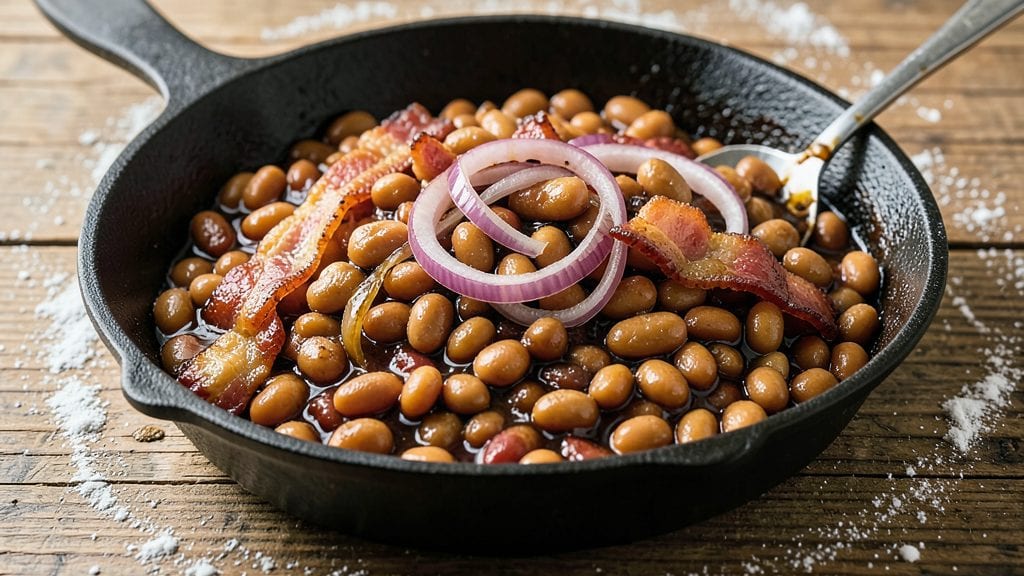
This old-fashioned canned baked beans recipe brings back the rich, smoky-sweet flavors of classic comfort food—just like your grandma used to make. The secret lies in slow simmering canned beans with brown sugar, molasses, and a touch of mustard, creating a sauce that's thick, glossy, and packed with depth.
I've perfected this method over years of testing, ensuring every batch delivers that perfect balance of sweetness and savory richness.
The beauty of this recipe is its simplicity—no fancy ingredients, just pantry staples you likely already have. A 30-minute prep followed by 2 hours of simmering transforms humble canned beans into a side dish that steals the show at any meal.
The slow cooking process develops complex flavors, turning simple ingredients into something extraordinary. Whether you're serving them alongside barbecue, cornbread, or just enjoying them on their own, these beans are a guaranteed crowd-pleaser.
What you'll end up with is a pot of glossy, thick beans with a caramelized top that's impossible to resist. The molasses and brown sugar create a deep, molasses-like sweetness that pairs perfectly with the smoky undertones from the mustard and bacon.
The texture is just right—creamy yet with enough body to hold its shape, and the aroma alone will have everyone asking what's for dinner.
For those short on time, you can adapt this recipe for a slow cooker, cutting the active cooking time to just 4 hours on low. The result is just as rich and flavorful, proving that old-fashioned comfort food doesn't require hours at the stove.
Let's get started on making these classic baked beans that taste like home.
Ingredients for old fashioned canned baked beans
Pantry staples that transform into rich, smoky-sweet comfort in one pot.
| Ingredient | Amount | Notes |
|---|---|---|
| Canned Navy Beans 🍲 | 2 cans | 15 oz each, drained and rinsed |
| Brown Sugar 🍯 | ¾ cup | Packed, light or dark |
| Molasses 🍯 | ½ cup | Unsulphured preferred |
| Yellow Onion 🧅 | 1 whole | Medium size, diced small |
| Dijon Mustard 🍯 | 2 tbsp | Mild or hot variety |
| Bacon 🥓 | 8 oz | Cooked, crumbled, or smoked |
| Kosher Salt 🧂 | 1 ½ tsp | Adjust to taste |
| Black Pepper 🌶️ | ½ tsp | Freshly ground preferred |
| Apple Cider Vinegar 🍎 | 1 tbsp | For tangy depth |
| Bay Leaves 🍃 | 2 whole | Removed before serving |
| Water 💧 | 1 ½ cups | For simmering |
| All-Purpose Flour 🌾 | 1 tbsp | For thickening |
The beans are the foundation, so Bush's or Libby's are my go-tos—they hold up best during slow cooking. For the molasses, Goya unsulphured is my secret weapon, giving that authentic depth without bitterness. Bacon makes all the difference here—thick-cut smoked bacon adds the most flavor, but pre-cooked crumbles work in a pinch. The onion should be diced small enough to melt into the sauce but not so fine it disappears. If you're using pre-cooked bacon, Trader Joe's has the best value for crumbles.
No molasses? Dark corn syrup at half the amount gets you close, though it lacks the complexity. Substituting bacon? Smoked paprika at 1 tsp mimics that smoky flavor. The flour is just for thickening—if you're making this in a slow cooker, you can skip it entirely. For the vinegar, apple cider is ideal, but white vinegar works fine if that's what you have. Fresh bay leaves are best, but dried at half the amount works too. The brown sugar can be swapped for white, but it won't caramelize as beautifully.
These beans taste even better the next day, so make a double batch if you can. Store leftovers in the fridge for up to 5 days or freeze for 3 months. The caramelized top hardens as it cools—just reheat with a splash of water or broth to restore that glossy finish. For serving, a sprinkle of fresh parsley brightens the dish, though it's optional since these beans are rich enough on their own.
Why You'll Love This Recipe
- No-Cook Shortcut: I swear by this recipe because it starts with one can—no soaking, no boiling, no fuss. Just drain, dump, and stir in the molasses and brown sugar while the oven preheats. That’s it. The onions caramelize right in the pan, so you’re not stuck with a separate skillet to scrub later.
- Sweet-Savory Magic: The molasses and Dijon mustard give these beans a depth that’s dangerously addictive—like a slow-cooked pot but with half the effort. The brown sugar keeps it rich without being cloying, and that little kick of mustard? It’s the secret that makes them taste like your grandma’s, not just canned beans.
- Tailgate or Tuesday: Between us, these beans are my go-to for anything—picnic blankets, football Sundays, or lazy weeknights when I just want something hearty. Serve them straight from the pan with cornbread, or toss them into a sandwich for a smoky, sweet lunch. (Yes, even on a Tuesday.)
- Budget Bulk: A single can of beans stretches to four meals for my family, and the sugar/molasses combo costs pennies per serving. Freeze leftovers in portions, and you’ve got a pantry staple that’s cheaper than takeout but way more satisfying. Plus, no one bats an eye when I serve them—even my picky teenager devours them.
Step-by-step instructions for old-fashioned canned baked beans
Here's how to transform simple canned beans into rich, smoky-sweet baked beans with deep flavor.
Cook and Prepare the Bacon
In a large oven-safe skillet, cook the 8 oz bacon over medium heat until crispy and golden brown, about 10-12 minutes. Use a slotted spoon to transfer the cooked bacon to a paper towel-lined plate, leaving the rendered fat in the skillet. Discard all but 2 tablespoons of the bacon fat—this rich, smoky fat forms the flavor base for your beans.
Once cool enough to handle, crumble the bacon into small, even pieces using your fingers or a fork. Set aside for later—you'll add it back when the beans are nearly finished. The bacon's smokiness will deepen as it reabsorbs the bean mixture's flavors during baking.
Sauté the Onion and Build the Flavor Base
In the same skillet (with the reserved bacon fat), add the 1 whole yellow onion, diced small. Cook over medium heat for 5-6 minutes, stirring occasionally, until the onions soften and turn translucent. You're looking for onions that are tender but not browned—this prevents bitterness in the final dish.
Add the 2 whole bay leaves, 1.5 teaspoons kosher salt, and 0.5 teaspoon black pepper to the skillet. Stir everything together for 30 seconds to toast the spices slightly and infuse their aromas into the onions. This step builds the aromatic foundation that carries through the entire recipe.
Combine All Ingredients for the Bean Mixture
Drain and rinse the 2 cans navy beans under cold water, then add them to the skillet with the onions. Stir in the 0.75 cup brown sugar, 0.5 cup molasses, 2 tablespoons Dijon mustard, 1 tablespoon apple cider vinegar, and 1.5 cups water. Use a wooden spoon to thoroughly mix everything until the beans are evenly coated with the sweet-savory sauce.
Bring the mixture to a gentle simmer over medium-low heat, then reduce heat to low and let it cook uncovered for 10 minutes. This allows the flavors to meld while the beans begin absorbing the liquid. Stir occasionally to prevent sticking—you'll know it's ready when the mixture thickens slightly and the beans are heated through.
Thicken and Finish the Beans
Sprinkle the 1 tablespoon all-purpose flour over the simmering beans and stir vigorously for 1-2 minutes until the mixture thickens noticeably. The flour acts as a natural thickener, giving the beans that classic baked texture. If the mixture is still too thin after stirring, add 1-2 tablespoons water to reach your desired consistency—it should be thick enough to coat the back of a spoon.
Remove the skillet from heat and stir in the crumbled bacon. The warm beans will help the bacon reabsorb some of the flavorful liquid, creating a perfect balance of smoky, sweet, and savory notes. Taste and adjust seasoning if needed—you may want to add a pinch more salt or a splash of vinegar for brightness.
Bake Until Caramelized and Bubbling
Transfer the skillet to a preheated 350°F oven and bake uncovered for 25-30 minutes. The beans are done when the top is deep golden brown with caramelized edges and the mixture is bubbling steadily. If the top browns too quickly, tent loosely with aluminum foil to prevent burning while allowing steam to escape.
Remove the beans from the oven and let them rest for 5 minutes before serving. This resting period allows the flavors to fully meld and the mixture to set slightly. Remove and discard the bay leaves before serving—these aromatic leaves have done their job and would be too tough to eat. The finished beans should be thick, glossy, and rich with layers of smoky-sweet flavor.
Pro Tips For Making Old Fashioned Canned Baked Beans
- Sweat the Onions First: Chop the onion into ¼-inch slices and cook them in a dry skillet over medium heat for 8–10 minutes until deeply caramelized—almost black in spots. This isn’t about color; it’s about building flavor that cuts through the sweetness of the molasses and brown sugar. (Yes, it’s messy, but scrap those bits into the pot—they’re gold.)
- Drain and Rinse Beans: Open the can of navy beans and drain them thoroughly, then give them a quick rinse under cold water. The starch clinging to them thickens the sauce into a gluey mess if you skip this. I learned this the hard way after serving beans that looked like they’d been rolled in syrup.
- Simmer, Don’t Boil: Once everything’s in the pot, bring it to a gentle simmer—tiny bubbles at the edges, not a rolling boil. High heat turns the molasses bitter and makes the beans tough. Cover and let it bubble away at low heat for at least 45 minutes, stirring occasionally to keep the bottom from sticking.
- Add Mustard Last: Stir in the Dijon mustard only in the final 10 minutes of cooking. Adding it earlier makes the sauce sharp and metallic. A splash of apple cider vinegar (1 tsp) at the same time brightens the molasses without overpowering the sweetness—trust me, it balances the whole dish.
Best sauces and condiments for this dish
Molasses-Glazed Topping
For that signature caramelized finish, brush the baked beans with a mix of 2 tbsp molasses and 1 tbsp brown sugar before baking. This creates a glossy, sticky crust that's irresistibly sweet and smoky.
I like to add ½ tsp smoked paprika to the mix for extra depth. Brush it on just before the final 10 minutes of baking—this ensures a perfect balance between caramelization and moisture. 🌟
Spicy Mustard Drizzle
Elevate your beans with a tangy kick by drizzling 1 tbsp hot Dijon mustard mixed with 1 tsp apple cider vinegar and a pinch of cayenne pepper on top. This adds a bright, spicy contrast to the sweetness.
I recommend using Colman's English Mustard for its sharp, robust flavor. Add it right before serving to keep the heat vibrant. 🌶️
Bacon Fat Sauce
Save the leftover bacon fat from cooking the bacon and use it to create a rich, smoky sauce. Simmer 2 tbsp reserved bacon fat with 1 tbsp molasses and ½ tsp black pepper for 3-4 minutes until it thickens slightly.
Drizzle this decadent sauce over the baked beans just before serving—it adds another layer of savory richness. 🥓
Maple-Brown Sugar Glaze
For a sweeter twist, combine 2 tbsp pure maple syrup with 1 tbsp brown sugar and ½ tsp vanilla extract to create a glossy glaze. Warm this mixture gently in a small saucepan until it thickens slightly, then drizzle it over the baked beans.
The maple adds a subtle earthiness that complements the molasses perfectly. 🍁
Smoked Paprika Dust
Finish your baked beans with a sprinkle of smoked paprika for an instant smoky aroma and visual appeal. Use about ½ tsp for a subtle hint or up to 1 tsp if you love bold smoky flavors.
I like to toast the paprika in a dry skillet for 30 seconds to deepen its flavor before sprinkling. This adds a beautiful rustic touch to the dish. 💫
Nutrition facts
Frequently asked questions
Can I use different types of canned beans instead of navy beans?
While navy beans are traditional, you can use great northern beans or pinto beans for a slightly different texture. Avoid kidney beans—they're too firm and won't soften properly. The key is using 15-ounce cans of any white or light-colored bean variety for the best results.
Why do my beans turn out too sweet or too bitter?
Too sweet? You likely used too much molasses or brown sugar. Start with 0.5 cup molasses and 0.5 cup brown sugar instead of the full amounts. Too bitter? The onions may have browned too much—keep them light golden. Also, check your molasses quality; some brands have a stronger flavor.
Can I make these in a slow cooker for easier preparation?
Yes! Follow the same recipe but skip the flour and bake step. Combine all ingredients in your slow cooker and cook on low for 4 hours or high for 2 hours. Stir occasionally and add water if needed to reach your desired thickness. The result will be just as rich and flavorful.
How do I store leftovers to keep them tasting fresh?
Let the beans cool completely, then transfer to an airtight container. They'll keep in the fridge for 5 days or freeze for 3 months. When reheating, add 1-2 tablespoons water or broth to restore moisture and prevent drying out. The caramelized top may harden—just warm it gently.
What's the secret to getting that perfect caramelized top?
The key is baking at 350°F until the edges are deep golden brown. For extra shine, brush with a mix of 2 tbsp molasses and 1 tbsp brown sugar during the last 10 minutes of baking. If it browns too quickly, tent loosely with foil to prevent burning while keeping the top crispy.