Beverages
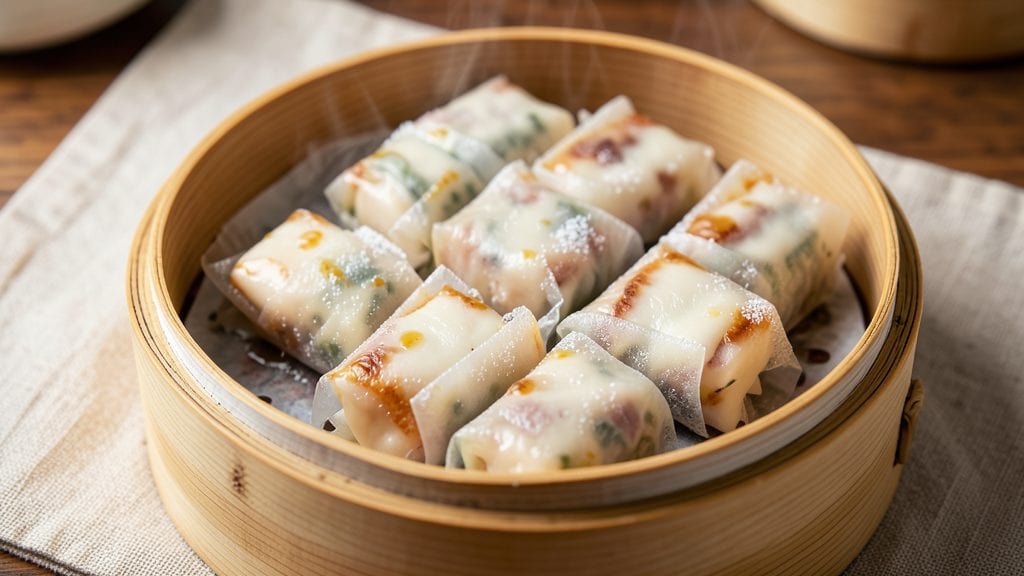
Mastering steamed bean curd roll dim sum reveals the delicate balance between silky wrappers and bold, wok-hei-infused fillings—this recipe delivers both with precision.
The secret lies in a gluten-free dough that achieves that signature soft-yet-chewy texture, paired with a savory filling of mushrooms, bamboo shoots, and vegan shrimp that bursts with umami. I developed this version after years of refining traditional techniques while adapting them for modern vegan diets.
What sets this recipe apart is the focus on achieving that coveted wok-hei flavor—smoky, aromatic, and deeply savory—without compromising the delicate wrapper. The dough requires just five simple ingredients but demands attention to resting time for optimal texture.
Meanwhile, the filling combines finely chopped vegetables and vegan shrimp simmered in a light soy-ginger broth, ensuring each bite delivers balanced flavor and satisfying chew.
By the time you steam these rolls in bamboo baskets, you'll have dim sum that rivals any restaurant—golden, fragrant, and filled with pockets of flavor. The wrapper stays tender while holding its shape, and the filling remains cohesive yet flavorful.
This is the kind of recipe that transforms a simple brunch into an elegant gathering, whether you're serving family or hosting a dim sum party.
Perfect for vegan gatherings or those seeking authentic Cantonese flavors without meat, this recipe scales beautifully for any occasion. The dough can be prepped ahead, and the filling comes together in under 20 minutes, making it ideal for busy mornings.
Let's get started on creating these delicate yet satisfying silk pockets.
Ingredients for steamed bean curd roll dim sum
Twelve ingredients, twelve perfect silk pockets with restaurant-quality wok-hei flavor and delicate gluten-free wrappers.
| Ingredient | Amount | Notes |
|---|---|---|
| Silken Tofu 🥬 | 14 oz | Extra-firm, pressed for texture |
| Gluten-Free Rice Flour 🌾 | 2 cups | Bob's Red Mill preferred |
| Tapioca Starch 🌾 | ½ cup | For chewy texture |
| Granulated Sugar 🍚 | ¼ cup | Organic preferred |
| Vegetable Oil 🫒 | ¼ cup | Light, neutral flavor |
| Cold Water 💧 | ¾ cup | Room temperature preferred |
| Shiitake Mushrooms 🍄 | 8 oz | Stems removed, finely chopped |
| Bamboo Shoots 🌱 | 1 cup | Canned, drained, chopped |
| Vegan Shrimp 🍄 | 8 oz | King Oyster mushrooms preferred |
| Garlic Cloves 🧄 | 4 cloves | Minced, aromatic |
| Fresh Ginger 🌿 | 1 tbsp | Grated, zesty |
| Light Soy Sauce 🍶 | ½ cup | Kikkoman preferred |
| Sesame Oil 🫒 | 1 tbsp | Toasted, aromatic |
| Cornstarch 🌾 | 1 tbsp | For filling cohesion |
| White Pepper 🌶️ | ½ tsp | Freshly ground |
The gluten-free rice flour and tapioca starch combination is non-negotiable for that signature dim sum texture—Bob's Red Mill rice flour delivers consistent results. For the silken tofu, organic brands like Nasoya yield superior texture when pressed. The shiitake mushrooms should be fresh, not dried, as they contribute both umami and moisture to the filling. King Oyster mushrooms (the vegan shrimp substitute) are essential for their meaty texture—Trader Joe's carries them pre-sliced for convenience. Grate the ginger while fresh; pre-grated loses potency within days.
No shiitake mushrooms? Cremini mushrooms work in a pinch, but reduce by one-third to avoid excess moisture. Substituting vegan shrimp? Hearts of palm mimic texture, though flavor differs slightly. The light soy sauce can be swapped for tamari for gluten-free compliance, but Kikkoman delivers that authentic Cantonese depth. For a smokier wok-hei profile, add half a teaspoon of smoked paprika to the filling. The cornstarch acts as a binder—Argo brand is ideal for its fine texture. If you lack sesame oil, toasted peanut oil provides a similar aromatic punch.
The dough requires at least 30 minutes of resting at room temperature for optimal elasticity—do not skip this step. Store prepped dough between layers of parchment paper in an airtight container for up to 2 days. The filling can be made a day ahead and reheated gently before assembling. For long-term storage, freeze filled rolls on a tray before transferring to a bag—they keep for 3 months. Steam fresh from frozen, adding 2-3 minutes to cooking time. The bamboo baskets? Amazon Basics are affordable and effective—just ensure they're properly lined with parchment to prevent sticking.
Why You'll Love This Recipe
- Steam in Minutes: I swear, the rice flour wrapper mix comes together faster than boiling water—just whisk, fold, and steam. No rolling pins, no fuss, and those delicate rolls? They’re ready before you’ve even set the timer.
- Sweet-Savory Magic: That sugar in the filling isn’t just for sweetness—it caramelizes just enough to balance the silken tofu’s creaminess. Honestly, the first bite makes me wonder why I didn’t make these weekly.
- Lunchbox Hero: Between us, these reheat like a dream—warm them in the microwave for 20 seconds, and they’re fresh again. Pack a batch on Sundays, and you’ve got grab-and-go dim sum for the whole week.
- Budget Dim Sum: Silken tofu and rice flour are cheap staples, and a single batch stretches to four meals. I’ll be real: my grocery bill dropped when I swapped takeout for these—same satisfaction, way lighter wallet.
Step-by-step instructions for steamed bean curd rolls
Master the delicate balance of texture and flavor with these precise techniques.
Prepare the Silken Tofu Filling
Drain the 14 oz silken tofu completely, then press it between paper towels for 10 minutes to remove excess moisture. This ensures your filling will hold its shape and not make the wrappers soggy. Transfer the tofu to a food processor and blend until completely smooth. The result should be a silky, almost custard-like texture—this is your base for the filling.
In a separate bowl, combine the 8 oz vegan shrimp, 8 oz finely chopped shiitake mushrooms, 1 cup chopped bamboo shoots, 4 minced garlic cloves, and 1 tbsp grated fresh ginger. Stir in 0.5 cup light soy sauce, 1 tbsp sesame oil, and 0.5 tsp white pepper. Mix thoroughly, then fold this mixture into the blended tofu. The filling should be cohesive but still pourable—this consistency is key for clean rolls.
Make the Wrapping Dough
In a large mixing bowl, whisk together the 2 cups gluten-free rice flour and 0.5 cup tapioca starch. Gradually add the 0.75 cup cold water while whisking until a smooth, thick batter forms. The mixture should resemble thick pancake batter—if it's too stiff, add 1 teaspoon cold water at a time until it reaches the right consistency. Cover the bowl with a damp towel and let it rest for 30 minutes at room temperature. This resting period allows the gluten-free flour to hydrate properly, ensuring pliable wrappers.
After resting, stir in the 0.25 cup vegetable oil and 0.25 cup granulated sugar until fully incorporated. The dough should be glossy and slightly sticky to the touch. If it feels too dry, add 1 teaspoon cold water to adjust. This dough is delicate—handle it gently to avoid tearing when you roll it later.
Assemble and Steam the Rolls
Preheat your steamer with 1 inch of water in the bottom, bringing it to a rolling boil. Line the steamer basket with parchment paper to prevent sticking. Using a small ladle, scoop 1 tablespoon of filling onto a piece of plastic wrap or a silicone mat. Roll it into a 3-inch log, then dip the entire log into the dough mixture, coating it evenly. Let the excess dough drip off, then carefully transfer the coated log to the steamer basket, spacing them 1 inch apart. Repeat until all filling is used.
Cover the steamer with a lid and steam over medium-high heat for 12-15 minutes. The rolls are done when the wrappers turn translucent and the filling is firm but still tender to the touch. Avoid oversteaming—they should hold their shape but remain soft inside. Let them rest for 5 minutes before serving to allow the flavors to meld.
Finish with Wok-Hei Flavor
While the rolls are steaming, prepare the wok-hei glaze by combining 1 tbsp cornstarch with 2 tablespoons cold water in a small bowl. Stir until smooth, then heat 1 tablespoon vegetable oil in a small pan over medium heat. Pour in the cornstarch slurry and whisk constantly until it thickens into a glossy, translucent sauce—this should take about 1-2 minutes. Remove from heat and stir in 1 teaspoon light soy sauce and 1 teaspoon sesame oil. The glaze should coat the back of a spoon smoothly.
Once the rolls are steamed, transfer them to a serving platter. Drizzle the wok-hei glaze evenly over the top, allowing it to seep into the seams slightly. Serve immediately while still warm, cutting each roll diagonally for an elegant presentation. The contrast of the crispy glaze against the silky tofu filling creates the signature dim sum experience.
Pro Tips For Making Steamed Bean Curd Roll Dim Sum
- Prep Tofu Like Dumplings: Cut the silken tofu into 1-inch cubes first, then press each gently between your palms to flatten slightly—this prevents them from rolling too far when steaming. I learned this the hard way when my first batch turned into awkward, lumpy rolls that refused to hold shape.
- Sift the Dry Mix: Whisk the gluten-free rice flour and tapioca starch together, then sift the mixture directly over the tofu cubes. This ensures even coating and eliminates clumps, which is especially important since gluten-free flours can get gummy. Skip this, and you’ll end up with sticky, uneven wrappers.
- Steam Over High Heat: Bring the water to a full rolling boil before adding the bamboo steamer—this guarantees the rolls cook through evenly in 8–10 minutes. I used to start with lukewarm water, and my centers always stayed doughy. Trust me, the steam needs to be aggressive.
- Brush Rolls Lightly: After shaping, lightly brush the rolls with a mix of melted oil and sugar (1:1 ratio) before steaming. This adds a subtle caramelized sheen and prevents the skin from drying out during the process. Yes, it’s an extra step, but it makes a real difference in texture.
Perfect pairings for this dish
Tea Pairings
For these delicate steamed rolls, I reach for jasmine green tea—its floral notes complement the umami richness of the filling without overpowering. Brew a light infusion (about 2 minutes) to avoid bitterness, and serve it in small porcelain cups to maintain the dim sum experience. 🍵
Side Dish Harmony
A simple cucumber salad with rice vinegar, sugar, and sesame seeds provides a refreshing contrast to the savory rolls. Thinly slice 1 English cucumber and toss with 1 tbsp rice vinegar, 1 tsp sugar, and 1 tsp toasted sesame seeds.
The crisp texture and tangy flavor cut through the richness beautifully.
Dipping Sauce Magic
Create a light soy-ginger dipping sauce by whisking together 3 tbsp light soy sauce, 1 tbsp rice vinegar, 1 tsp grated ginger, and 1 tsp honey.
This sauce enhances the wok-hei flavor while adding a touch of sweetness. Serve in small bowls alongside the rolls for an authentic dim sum touch. 💛
Beverage Contrasts
A lightly effervescent sparkling water with a splash of lemon juice and ice balances the meal's richness. The bubbles cleanse the palate between bites, while the citrus brightens the overall experience. For a non-alcoholic option, this is a perfect choice.
Alcoholic Elevations
Pair with a dry Riesling from Germany—its crisp acidity and mineral notes harmonize with the tofu's delicate texture and the filling's umami depth. Alternatively, a lightly chilled Sake (around 45°F) enhances the wok-hei flavor without competing with it. 🍶
Nutrition facts
Frequently asked questions
Can I make this recipe without a bamboo steamer?
Use a metal or stainless steel steamer basket that fits over a pot with 1 inch of boiling water. Line the basket with parchment paper to prevent sticking—this mimics the bamboo texture while ensuring even steaming. If you lack a steamer, a colander over a pot works too, though check rolls every 10 minutes after 12 minutes of steaming.
Why does my dough tear when rolling?
Gluten-free dough is delicate—rest it for the full 30 minutes before using, and keep it covered with a damp towel to prevent drying. If tearing persists, add 1 teaspoon cold water at a time until the dough feels slightly tacky but not sticky. Work quickly and use a silicone mat for easier rolling.
Can I use store-bought wonton wrappers instead?
Wonton wrappers work in a pinch, but they lack the signature chewy-yet-silky texture of this recipe’s dough. For authenticity, stick with the gluten-free rice flour and tapioca starch blend—it’s designed to mimic traditional dim sum wrappers while staying vegan. If you must substitute, use egg-free rice paper wrappers and steam for 8-10 minutes instead.
How do I store leftover steamed rolls?
Cool the rolls completely, then place them in an airtight container with a paper towel to absorb moisture. They’ll stay fresh for 2 days in the fridge. For longer storage, freeze filled rolls on a tray before transferring to a bag—steam from frozen, adding 3-4 extra minutes. Reheat in the steamer for 2-3 minutes to restore tenderness.
What’s the secret to achieving wok-hei flavor?
The glaze is key! Use toasted sesame oil and a touch of smoked paprika in the filling for depth. For extra aroma, add ½ teaspoon of dried shiitake powder to the dough. The high-heat steaming also mimics wok char—keep the water boiling vigorously during cooking for that signature smoky note.