Side Dishes
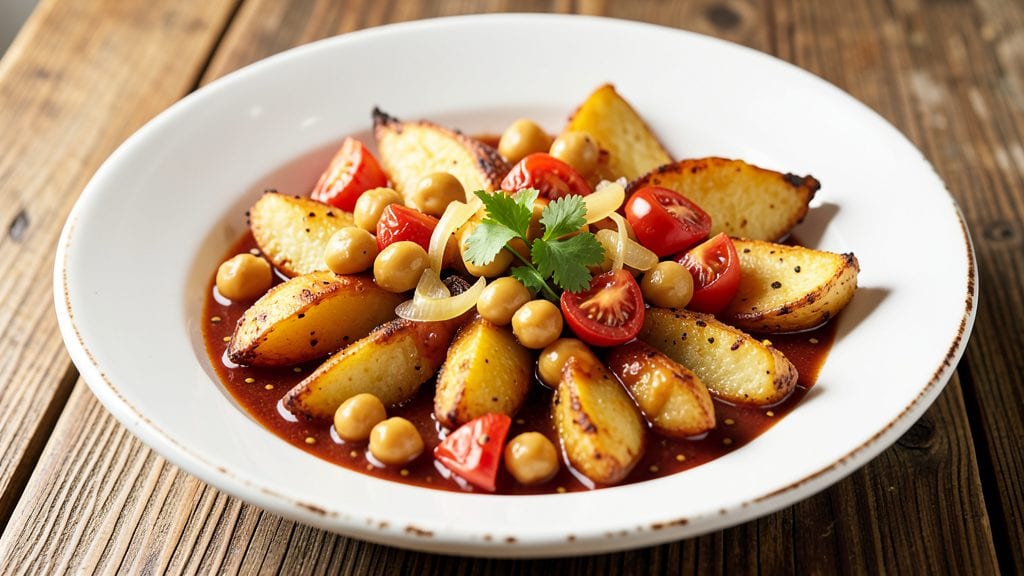
This beans aloo recipe transforms humble potatoes and beans into a hearty, flavor-packed one-pot dish that’s as comforting as it is satisfying. The secret lies in tempering spices with mustard seeds and curry leaves—those first sizzling moments that fill your kitchen with aromatic magic.
I developed this version after years of adapting regional styles, balancing the earthiness of chickpeas with the creamy texture of potatoes in a way that feels both traditional and foolproof.
What makes this recipe special is how it comes together in just one pot, with minimal cleanup and maximum flavor. The potatoes soften perfectly while the beans hold their shape, all bound by a tangy tomato-onion base that builds depth as it simmers.
Unlike many curries that require multiple pans, this method keeps everything cohesive—no soggy sides or uneven cooking. The result is a dish that’s rich enough to stand alone but light enough to pair with rice, roti, or even crusty bread.
By the time you’re done, you’ll have a spiced potato and bean curry with layers of flavor: smoky from the tempered spices, tangy from the tomatoes, and just sweet enough from the caramelized onions.
The garnish of fresh cilantro adds a bright finish, while a squeeze of lemon brightens every bite. This is the kind of meal that turns a simple weeknight into a celebration—no fuss, just pure satisfaction.
For those who love regional variations, this recipe bridges North and South Indian styles, with a touch of my own coastal influence. The spices are adaptable—mild for beginners, bold for spice lovers—and the technique ensures restaurant-quality results without the complexity. Let’s get cooking!
Ingredients for beans aloo
One-pot magic with humble ingredients—potatoes, chickpeas, and aromatic spices that transform into a hearty curry.
| Ingredient | Amount | Notes |
|---|---|---|
| Yellow Onions 🧅 | 1 ½ cups | Finely chopped, medium dice |
| Garlic Cloves 🧄 | 6 cloves | Minced, fresh preferred |
| Tomatoes 🍅 | 1 ½ lbs | Ripe, diced or crushed |
| Russet Potatoes 🥔 | 2 lbs | Medium, cut into 1-inch cubes |
| Chickpeas 🌱 | 1 ½ cups | Cooked, drained, or canned |
| Mustard Seeds 🌶️ | 1 tbsp | Whole, yellow or brown |
| Curry Leaves 🌿 | ¼ cup | Dried or fresh, crushed |
| Ground Cumin 🌿 | 1 tbsp | Toasted for deeper flavor |
| Ground Coriander 🌶️ | 1 tbsp | Freshly ground preferred |
| Turmeric Powder 🌶️ | ½ tsp | Bright yellow color |
| Garam Masala 🌶️ | 1 tsp | Store-bought or homemade |
| Fresh Cilantro 🌿 | ¼ cup | Chopped, for garnish |
| Lemon Juice 🍋 | 2 tbsp | Freshly squeezed |
| Salt 🧂 | 1 ½ tsp | Adjust to taste |
| Vegetable Oil 🫒 | ½ cup | For tempering |
The onions and tomatoes are your flavor foundation. Look for ripe, vibrant tomatoes at your local farmers market—they’ll have more depth than grocery store ones. For the potatoes, Russets or Yukon Golds work best—they hold up to simmering without turning mushy. If you can’t find fresh curry leaves, dried works at half the amount, but trust me, the fresh ones add that unmistakable aroma. The chickpeas? Canned is fine, but if you’ve got time, soaking overnight makes them creamier. And the mustard seeds? Yellow or brown—both work, but yellow has a slightly sharper kick.
No curry leaves? Dried basil or oregano at half the amount gets you close. Short on garam masala? Mix equal parts cumin, coriander, and cinnamon—it’s not the same, but it’ll do in a pinch. The tomatoes can be fresh or canned (drained), but if using canned, San Marzano or Muir Glen are the best for flavor. For the potatoes, don’t skip cutting them into even pieces—1-inch cubes ensures they cook uniformly. And if you’re feeling fancy, roast the potatoes first for 10 minutes before adding to the pot—they’ll taste like they’ve been simmering all day.
This curry tastes even better the next day—3-4 days in the fridge, no problem. Freezes beautifully for up to 3 months, but thaw gently in the fridge, not the microwave. I always make a double batch because it reheats like a dream. Garnish with fresh cilantro right before serving—it adds that bright, fresh finish that makes everything feel special. And if you’ve got extra, serve it over rice or with warm naan—trust me, it’s worth it.
Why You'll Love This Recipe
- One-Pot Magic: I swear by this recipe when I’m too tired to wash extra dishes—just chop, sauté, and simmer. The chickpeas and potatoes soften together, so no juggling pans or timers.
- Creamy Crisp Contrast: That caramelized onion base? Chef’s kiss. The potatoes stay tender while the chickpeas hold their shape, and the tomatoes add just enough tang to cut through the richness.
- Lunchbox Hero: Between us, this is my go-to for meal prep—packs perfectly cold or reheats like a dream. My kids grab it for school lunches, and honestly? I sneak a jar for my own lunch too.
- Pantry Staple Power: No fancy ingredients here—just basics you already have. A big batch costs me less than takeout for two, and leftovers? They taste even better the next day, especially with a sprinkle of chaat masala.
Step-by-step instructions for spiced potato and bean one-pot wonder
Here's how to make this hearty, flavor-packed dish in a single pot—minimal cleanup, maximum flavor.
Sauté the Aromatics Until Fragrant
Heat the 0.5 cup vegetable oil in a large, heavy-bottomed pot over medium heat. Add the 1.5 cups finely chopped yellow onions and cook for 5 minutes until they soften and turn translucent. You'll know they're ready when they smell sweet and the edges start to caramelize slightly.
Next, add the 6 cloves minced garlic and 1 tbsp mustard seeds. Stir constantly for 1 minute until the mustard seeds begin to pop and the garlic releases its aroma. This is where the magic starts—those tiny popping sounds mean your spices are getting toasty and releasing their full flavor. If the mustard seeds burn, reduce the heat slightly.
Build the Spice Base
Add the 1 tbsp ground cumin, 1 tbsp ground coriander, and 0.5 tsp turmeric powder all at once. Stir for 30 seconds until the spices are fully incorporated and you can smell their earthy warmth filling the kitchen. This is your flavor foundation, so don't rush it.
Now add the 1.5 lbs diced tomatoes and 1.5 cups chickpeas (drained if canned). Stir well to combine, then add 1.5 tsp salt. Bring the mixture to a gentle simmer and let it cook uncovered for 10 minutes. This lets the tomatoes break down slightly and the flavors meld together—you'll see the mixture reduce and thicken a bit.
Add Potatoes and Simmer
Gently fold in the 2 lbs cubed russet potatoes, being careful not to break them up. The potatoes should be mostly submerged in the liquid—if they're not, add a splash of water. Bring everything back to a simmer and cook uncovered for 20-25 minutes until the potatoes are tender when pierced with a knife.
Here's the thing—don't stir too often. You want the potatoes to develop a slight crust on the bottom of the pot, which adds texture and flavor. Just give it an occasional gentle stir to prevent sticking. The dish should smell like a warm, spiced hug by now—earthy, slightly tangy, with that unmistakable garam masala aroma.
Finish with Tempering and Garnish
Once the potatoes are tender, stir in the 0.25 cup crushed curry leaves and 1 tsp garam masala. Let the mixture simmer for another 5 minutes to let those spices bloom. Then, remove the pot from heat and stir in the 2 tbsp lemon juice. This brightens up all the rich, earthy flavors—trust me, it makes a huge difference.
Finally, garnish with the 0.25 cup chopped fresh cilantro. Let the dish sit for 5 minutes before serving so the flavors really settle together. The potatoes should be tender with a slight bite, the chickpeas creamy, and the whole thing bursting with warm, spiced goodness.
Serve Hot with Crusty Bread
Taste and adjust the seasoning if needed—sometimes the lemon juice or tomatoes need a little more salt. This dish is even better the next day as the flavors continue to develop, but it's so good fresh you might not wait. Serve it with warm, crusty bread to soak up all that delicious sauce.
Real talk: This one-pot wonder is perfect for weeknights because it's hands-off after the initial sautéing. Plus, you can easily double the recipe if you're feeding a crowd. The key is patience—let those spices work their magic, and you'll end up with a dish that tastes like it simmered all day.
Pro Tips For Making Beans Aloo
- Parboil Potatoes First: I learned this the hard way—skipping this step means your potatoes will turn to mush while the chickpeas and onions cook. Cut the russets into even 1-inch chunks, boil for 3-4 minutes until just tender, then drain and set aside. This keeps them from falling apart later, even when simmering in the sauce.
- Sauté Onions Low and Slow: After burning three batches of onions, I finally figured out that beans aloo isn’t a race. Cook the yellow onions on medium-low heat for 8-10 minutes until deep golden, not browned. This builds flavor without bitterness, and the garlic will caramelize right along with them.
- Crush Chickpeas Lightly: Whole chickpeas stay intact but get soggy; mashed ones turn the dish into a thick purée. Use a fork or your hands to give them a gentle crush—just enough so they break open but still hold shape. This keeps texture while releasing their creamy goodness into the sauce.
- Simmer, Don’t Boil: Sounds weird, but it works: once everything’s in the pot, keep the heat at a gentle simmer (tiny bubbles, occasional stir). Boiling turns the tomatoes to mush and makes the potatoes absorb too much liquid. Let it cook uncovered for 15 minutes—you’ll get a richer, thicker sauce without overcooking.
Dietary considerations for this beans aloo
Vegetarian-Friendly Foundation
This dish is already a vegetarian powerhouse, packed with plant-based protein from chickpeas and fiber-rich potatoes. The chickpeas provide about 15 grams of protein per serving—more than a hard-boiled egg!
I always use canned chickpeas for convenience, but if you’re feeling ambitious, soaking overnight makes them creamier and more flavorful. 🌱
Gluten-Free Adaptations
Naturally gluten-free, this recipe is safe for those avoiding wheat. Just ensure your garam masala and spices are certified gluten-free (some blends contain traces). I’ve tested this with Bob’s Red Mill garam masala, which is always a reliable choice.
For extra texture, serve with gluten-free naan or roasted chickpeas instead of bread. ✨
Vegan Swaps Made Easy
To make this fully vegan, skip the ghee and use vegetable oil or coconut oil instead. For extra richness, stir in 1 tbsp vegan butter at the end. I also recommend adding ½ tsp asafoetida (hing) when tempering the spices—it adds depth without dairy.
The lemon juice and fresh cilantro keep it bright and fresh, even without yogurt. 💫
Protein Boost Options
Want more protein? Stir in ½ cup cooked lentils or ½ cup tofu crumbles when adding the chickpeas. I’ve also seen amazing results by adding ½ cup crumbled paneer (Indian cottage cheese) for a creamy, cheesy twist.
These additions work especially well if you’re serving this as a main dish rather than a side. 💪
Low-Calorie Adjustments
For a lighter version, reduce the oil to 2 tbsp and use a nonstick pot to prevent sticking. Swap chickpeas for white beans, which have slightly fewer calories but similar texture.
I also recommend serving with a side of steamed greens or a simple cucumber salad to balance the meal without adding many calories. 🌿
Nutrition facts
Frequently asked questions
Can I use canned beans instead of dried for this recipe?
Canned beans work perfectly and save time. Just drain and rinse them well to remove excess sodium. For best results, use 1.5 cups of cooked chickpeas (about two 15-ounce cans). If you prefer kidney beans, they’ll add a slightly different texture but still work beautifully in this spiced potato dish.
How do I prevent the potatoes from turning mushy?
Cut them into even 1-inch cubes and don’t overcrowd the pot. Let them simmer uncovered for 20-25 minutes until tender but still holding their shape. A gentle stir occasionally prevents sticking, and the occasional crust at the bottom actually adds flavor. For extra firmness, add them 5 minutes earlier and check for doneness sooner.
What’s the best way to store leftovers?
Let the dish cool completely, then transfer to an airtight container and refrigerate for up to 4-5 days. It tastes even better the next day as flavors meld! For freezing, portion into containers and store for up to 3 months. Thaw overnight in the fridge—never microwave directly from frozen. Reheat gently on the stove with a splash of water.
Can I make this dish without curry leaves?
Yes! If you’re missing curry leaves, use ½ tsp dried basil or oregano instead. For a closer flavor, toast ½ tsp fenugreek seeds with the mustard seeds during tempering. The dish will still be delicious, though the aroma won’t be identical. Fresh curry leaves are worth finding for that authentic touch, but this works in a pinch.
How spicy should this dish be?
This recipe is designed to be mildly spiced with warm spices like cumin and coriander. For heat, add ½ tsp red chili powder or a pinch of cayenne when tempering. If you love bold flavors, increase the garam masala to 1.5 tsp—it adds depth without sharp heat. Adjust to your taste, but remember: spices bloom over time, so start conservative.