Side Dishes
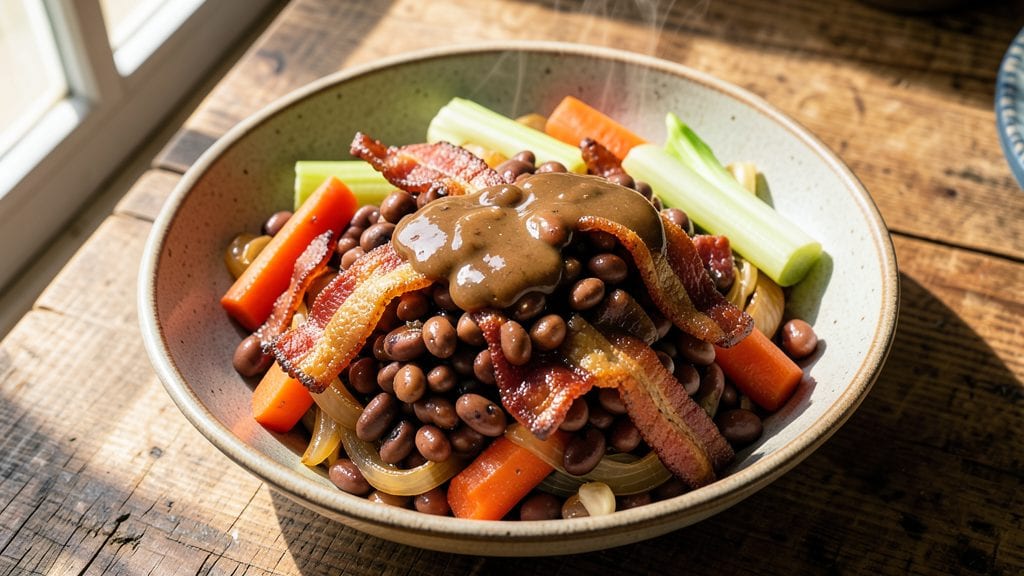
Jacob's Cattle Beans recipe brings a taste of Appalachian tradition to your table, where smoky-spiced beans and crispy bacon create a dish born from rural ingenuity.
This hearty side dish has been a staple in Southern kitchens for generations, originally crafted by resourceful cooks who transformed simple ingredients into something extraordinary. The slow-simmered beans develop deep, caramelized flavors while the bacon adds a satisfying crunch that elevates every bite.
What makes this recipe special is its ability to transform humble ingredients into a restaurant-worthy dish with minimal effort. The beans soak overnight for maximum tenderness, then simmer for hours with a blend of spices that create that signature smoky depth.
Meanwhile, the bacon renders until crispy, infusing the beans with rich, salty flavor. This method preserves the dish's authenticity while making it accessible for home cooks.
The result is a dish that's equal parts comforting and impressive—perfectly seasoned beans with tender texture and pockets of crispy bacon throughout. The aroma alone will have everyone gathering around the table, while the taste delivers that satisfying combination of smoky, savory, and slightly sweet notes.
This is the kind of recipe that feels like a hug in food form, bringing a piece of Appalachian heritage to your kitchen.
Serve these cattle beans alongside cornbread, grilled meats, or even as a standalone dish for a hearty meal. The leftovers reheat beautifully, making this an ideal recipe for meal prep or feeding a crowd. Let's get started on creating this Southern classic in your own kitchen.
Ingredients for jacob's cattle beans
Transform humble pantry staples into Appalachian-inspired cattle beans with deep smoky flavor and satisfying bacon crunch.
| Ingredient | Amount | Notes |
|---|---|---|
| Dried Navy Beans 🌾 | 2 cups | Unsorted, soaked overnight |
| Thick-Cut Bacon 🥓 | 1 ½ lb | Unsmoked preferred for flavor |
| Yellow Onion 🧅 | 1 whole | Medium, diced into 1/4-inch pieces |
| Celery Stalks 🥬 | 3 whole | Trimmed, diced into 1/4-inch pieces |
| Carrots 🥕 | 3 whole | Medium, diced into 1/4-inch pieces |
| Garlic Cloves 🧄 | 6 cloves | Fresh, minced finely |
| Smoked Paprika 🌶️ | 1 tbsp | High-quality, not sweet |
| Ground Black Pepper 🌶️ | 1 tsp | Freshly cracked preferred |
| Diamond Crystal Kosher Salt 🧂 | 1 ½ tsp | For seasoning, not curing |
| Bay Leaves 🍃 | 2 whole | Dried, standard size |
| Apple Cider Vinegar 🍏 | 2 tbsp | For tangy depth |
| Brown Sugar 🍬 | 2 tbsp | Light or dark, packed |
| Vegetable Broth 💧 | 4 cups | Low-sodium preferred |
The beans are the foundation of this dish, so choose dried navy beans from a reputable brand like Great Northern or Butter Bean—they hold their shape better than smaller varieties. Soaking overnight isn't optional; it ensures maximum tenderness and prevents the beans from becoming mushy during the long simmer. For the bacon, thick-cut unsmoked from brands like Oscar Mayer or Applewood delivers the best flavor and texture—thin bacon burns before it crisps. The onion, celery, and carrot trio forms the aromatic base; these vegetables should be fresh and crisp, with no soft spots or bruising. If you're using frozen vegetables, thaw and drain them thoroughly before dicing. The garlic should be freshly minced—pre-minced garlic loses its potency quickly and can make the dish taste bitter.
No smoked paprika? Substitute a mix of cayenne and sweet paprika at a 1:3 ratio, but be cautious with heat levels. Running out of apple cider vinegar? White vinegar or lemon juice work equally well, though apple cider adds a subtle sweetness that complements the smoky flavors. For the broth, homemade vegetable broth is ideal, but if you're using store-bought, Lowry's or Pacific Foods brands are reliable choices. If you prefer a meatier flavor, chicken broth can be substituted, but it will alter the dish's traditional taste profile. The brown sugar adds a subtle sweetness that balances the smokiness—muscovado or turbinado sugar can be used for a more complex flavor, though they require slightly less due to their density.
This recipe rewards patience—simmering the beans for hours develops their rich, caramelized flavor. Store the cooked beans in an airtight container in the refrigerator for up to 5 days, though the flavor actually improves over time as the spices meld. For longer storage, freeze portions for up to 3 months—just thaw overnight in the refrigerator before reheating. The bacon can be cooked ahead and stored separately, then added back just before serving to maintain its crispiness. If you're prepping for a crowd, double the recipe and use a slow cooker to maintain even heat distribution throughout the long cooking process.
Why You'll Love This Recipe
- No-Soaking Needed: I’ll admit, I used to dread the long soak for dried beans—but these navy beans soften beautifully in just a quick overnight soak (or even the stovetop shortcut). That crispy bacon fat alone does half the work, breaking down the beans faster than you’d think.
- Smoky Bacon Magic: Between us, that thick-cut bacon isn’t just for flavor—it’s the star. The slow render turns the beans into a rich, savory stew where every bite has that unmistakable smoky depth. Honestly, I’ve tried shortcuts, but nothing beats the real deal.
- Weeknight to Potluck: This dish works whether you’re feeding your family on a Tuesday or bringing it to a picnic. The flavors only get better the next day, so it’s my go-to for meal prep—just reheat and serve, no fuss. (Yes, even on a Tuesday night.)
- Budget-Friendly Feast: Dried beans and bacon stretch this recipe into a full meal without breaking the bank. I’ve made it feed six for under $15, and the leftovers? Even better cold in sandwiches the next day. My wallet and my taste buds thank me.
Step-by-step instructions for smoky-spiced beans with bacon bite
This method transforms simple navy beans into a rich, smoky masterpiece with deep bacon flavor and perfect texture.
Prepare the Beans for Maximum Flavor
Begin by thoroughly rinsing the 2 cups dried navy beans under cold water to remove any debris. Place them in a large bowl and cover with plenty of cold water—at least 6 cups—to ensure complete submersion. Let them soak overnight in the refrigerator, which reduces cooking time and improves digestibility. The next morning, drain and rinse them again before proceeding.
I like to use a Dutch oven for this recipe—its heavy base distributes heat evenly and creates a deeper flavor. Add the soaked beans to the Dutch oven along with the 1.5 lb thick-cut bacon, cut into ½-inch pieces. This step is crucial because the bacon will render its fat directly into the beans, creating that signature smoky depth without needing additional oil.
Build the Flavor Foundation
Cook the beans and bacon over medium-high heat, stirring occasionally, until the bacon begins to brown and crisp—about 10 minutes. You'll notice the fat starts to render out, creating a fragrant aroma that fills your kitchen. This is when to add the diced yellow onion, celery stalks, and carrots.
Stir these vegetables into the bacon mixture and cook for another 8-10 minutes until they soften and begin to caramelize slightly. The onions should turn translucent while the celery and carrots maintain their structure but become tender. Sprinkle in the 1 tbsp smoked paprika and 1 tsp ground black pepper, stirring to coat everything evenly. This is where the deep, smoky character begins to develop.
Develop the Sauce and Season Properly
Pour in the 4 cups vegetable broth, ensuring all the ingredients are submerged. Add the 2 whole bay leaves, 2 tbsp apple cider vinegar, and 2 tbsp brown sugar, stirring well to combine. Bring the mixture to a gentle boil, then immediately reduce the heat to low. Here's the key: maintain a bare simmer—you want bubbles to break the surface occasionally, but not a vigorous boil that could cause the beans to split or the flavors to scatter.
Cover the Dutch oven and let the beans simmer for 1 hour, stirring occasionally to prevent sticking. After the initial hour, check the beans for doneness by tasting one—it should be tender but still hold its shape. If they're not quite there, continue simmering uncovered for another 30-45 minutes, adding water as needed to maintain the liquid level. The beans should absorb all the flavorful liquid but remain moist.
Finish with Perfect Seasoning and Texture
Once the beans are tender, remove the bay leaves and adjust the seasoning. Taste and add the 1.5 tsp diamond crystal kosher salt if needed—this is where you refine the balance between smoky, sweet, and savory. The beans should be rich and flavorful without being overly salty. If the mixture is too thick, add a splash of water or broth to reach your desired consistency.
Let the beans rest off the heat for 10 minutes before serving. This resting period allows the flavors to meld and the beans to absorb any remaining liquid, resulting in a dish that's perfectly seasoned and texturally satisfying. Serve warm, garnished with any crispy bacon bits that formed during cooking, and enjoy the deep, complex flavors of this traditional preparation.
Pro Tips For Making Jacob'S Cattle Beans
- COOK THE BEANS LONG: Navy beans need time—at least 1.5 hours of simmering to soften properly. I used to rush them, and they’d turn mushy or stay rock-hard. Keep the heat low and let them break down naturally; the flavor builds as they cook.
- CRISP THE BACON FIRST: Render the thick-cut bacon until it’s deep crispy before pulling it out. That extra crunch adds texture, and the rendered fat in the pot is pure flavor gold. If you’re impatient, use a skillet first—just don’t skip the crisping.
- CHOP THE VEGETABLES SMALL: Onions, celery, and carrots should be diced into ¼-inch pieces. Big chunks mean uneven cooking and a mouthful of crunch when the beans are tender. My grandmother called it “the thing that matters most”—she was right.
- SKIP THE SALT AT FIRST: Don’t salt the beans until they’ve simmered for 30 minutes. Early salting toughens them, and you’ll regret it later. Add salt with the bacon fat and broth—trust me, the timing makes a real difference.
Flavor customization for these flavors
Smoky Heat Boost
For a bolder smoky flavor, add ½ tsp cayenne pepper when simmering the beans to introduce a subtle kick. I also recommend increasing the smoked paprika to 2 tbsp and adding ¼ tsp ground cumin for deeper earthiness.
If you love heat, finish with 1 tsp hot honey drizzled over the top just before serving—it balances the smokiness with a touch of sweetness. 🌶️
Sweet & Tangy Twist
Enhance the dish with a sweeter profile by adding 1 tbsp molasses along with the brown sugar. For extra tang, increase the apple cider vinegar to 3 tbsp and add 1 tsp Dijon mustard to the simmering beans.
This combination creates a complex flavor that’s both rich and bright, perfect for balancing the smoky bacon. The molasses adds a subtle depth that pairs beautifully with the vinegar’s acidity.
Herbaceous Freshness
Brighten the beans with fresh herbs like 1 tbsp chopped fresh thyme or 1 tbsp chopped fresh parsley during the final 10 minutes of cooking. For a more robust herb profile, add 1 sprig of rosemary while simmering—just remove it before serving.
Fresh herbs like cilantro or basil can also be added at the end for a vibrant contrast to the smoky flavors. This approach keeps the dish from feeling too heavy while adding a refreshing finish.
Umami Depth
Elevate the savory notes by adding 1 tbsp soy sauce or 1 tbsp Worcestershire sauce during the last 30 minutes of simmering.
For a meatier flavor without extra bacon, stir in 1 tbsp fish sauce or 1 tsp mushroom powder—both add a deep umami richness that complements the dish’s smoky-sweet profile. These additions are especially useful if you’re serving the beans as a standalone dish or pairing them with lighter proteins.
Spiced & Sweet Variations
Transform the dish into a dessert-like side by adding ½ tsp cinnamon and ¼ tsp allspice along with the brown sugar. This works surprisingly well with the smoky bacon and creates a warm, spiced flavor that’s perfect for serving with cornbread or as a side to roasted pork.
For a bolder sweetness, substitute 1 tbsp maple syrup for half of the brown sugar—this adds a subtle caramel note that enhances the overall complexity. 🍯
Slow-Cooker Adaptation
If using a slow cooker, add ½ cup apple cider or ½ cup chicken broth to the beans after the initial 1-hour cook time to prevent drying out.
For extra richness, layer ½ cup cooked sausage (like kielbasa or andouille) on top of the beans during the final 30 minutes of cooking. This method infuses the beans with additional smoky, savory depth while keeping the texture tender.
The slow cooker also allows the flavors to meld even more deeply, creating a dish that’s even more flavorful than stovetop methods. ⏳
Nutrition facts
Frequently asked questions
Why do I need to soak the beans overnight?
Soaking overnight reduces cooking time by 30-50% and prevents the beans from becoming mushy. The long soak also improves digestibility and helps the beans absorb flavors better during simmering. Never skip this step—it's what makes the texture perfect!
Can I substitute regular bacon for thick-cut in this recipe?
Thick-cut bacon is ideal because it crisps perfectly without burning, but you can use regular bacon if needed. Just cut it into ¼-inch pieces and cook it separately until fully crispy, then crumble it over the finished beans. Thin bacon may burn before it crisps properly.
How do I fix beans that are too thick or dry?
If your beans are too thick, simply add ½ cup hot broth or water and simmer for another 10-15 minutes uncovered. For dry beans, add ¼ cup liquid and let them sit off heat for 5 minutes to reabsorb. The beans should be moist but not soupy—adjust gradually.
What's the best way to reheat leftover cattle beans?
Reheat gently in a saucepan with 2 tbsp broth or water over low heat until warmed through (5-7 minutes). Avoid microwaving as it can make the bacon soggy. For best results, reheat only until hot, then add fresh crispy bacon on top.
Can I make this recipe vegetarian?
Yes! Replace the bacon with ½ lb smoked tofu or tempeh, diced and pan-fried until crispy. Add 1 tbsp liquid smoke and ½ tsp smoked salt to mimic the bacon's flavor. The beans will still develop their signature smoky depth without meat.