Desserts
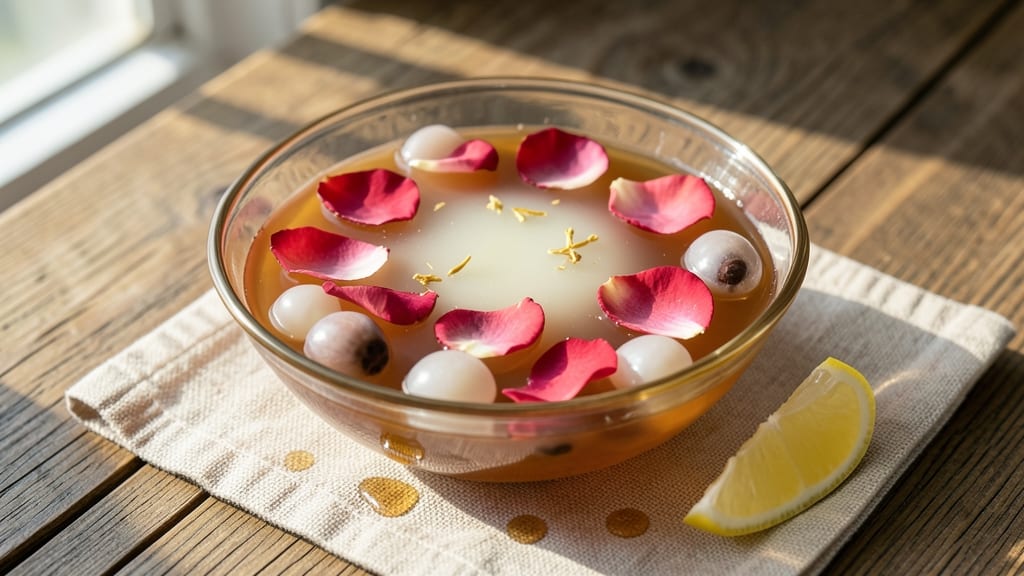
Creating mung bean jelly with rose and lychee transforms a simple dessert into an elegant, silky-smooth experience that feels like a taste of tradition.
This recipe delivers a delicate balance of floral and fruity notes while maintaining the jelly’s signature velvety texture—perfect for special occasions or when you crave something light yet indulgent. The process requires patience, but the result is worth every step: a dessert that’s both visually stunning and effortlessly refined.
What makes this recipe stand out is its versatility—adjust the sweetness to your preference, or experiment with modern twists like adding pandan or coconut milk for extra depth. The key lies in proper soaking and straining, which ensures the jelly sets smoothly without any graininess.
With about 1 hour of prep and 30 minutes of active cooking, you’ll have a dessert that feels luxurious yet remains approachable for home cooks.
The final product is a silky, translucent jelly with a delicate rose aroma and subtle lychee sweetness—ideal for serving chilled in small glasses or as a centerpiece for gatherings. Its vegan-friendly nature makes it inclusive, while the floral-fruity combination elevates it beyond ordinary desserts.
Whether you’re preparing for a celebration or simply treating yourself, this recipe delivers restaurant-quality results at home.
Pair it with fresh berries, toasted coconut flakes, or a drizzle of honey for added texture and flavor. The jelly keeps well in the fridge for up to 5 days, making it perfect for meal prep or gifting. Let’s get started on creating this timeless yet modern dessert masterpiece.
Ingredients for mung bean jelly
Elegant floral-fruity ingredients for a dessert that tastes like tradition meets modern sophistication.
| Ingredient | Amount | Notes |
|---|---|---|
| Mung Beans 🌾 | 1 cup | Uncooked, soaked overnight |
| Fresh Rose Petals 🌸 | ½ cup | Food-grade, organic preferred |
| Canned Lychees 🍈 | 14 oz | In juice, drained well |
| Agave Nectar 🍯 | ½ cup | Light or medium grade |
| White Sugar 🍚 | ½ cup | Granulated, fine grain |
| Lemon Juice 🍋 | 2 tbsp | Freshly squeezed |
| Water 💧 | 4 cups | Filtered preferred |
| Coconut Milk 🥥 | 1 can | Full-fat, chilled overnight |
| Pandan Leaf 🌿 | 1 whole | Tied in cheesecloth |
| Sea Salt 🧂 | ¼ tsp | Fine grain preferred |
| Cornstarch 🌾 | 2 tbsp | For thickening |
| Vanilla Extract 🌸 | 1 tsp | Pure, alcohol-free |
Mung beans are the star—organic or sprouted if you can find them, as they soak up flavors better. Whole Foods or Asian markets usually carry high-quality mung beans in bulk. The rose petals? 100% food-grade, no pesticides—check the organic section at Whole Foods or specialty herb shops. For lychees, Martin's or canned lychees in light syrup from the Asian aisle are ideal. Avoid the heavy syrup kind unless you're adjusting sweetness later. The coconut milk should be full-fat and chilled overnight—this helps emulsify the jelly beautifully. If you can't find pandan, vanilla bean paste works in a pinch for that subtle floral note.
No agave? Maple syrup or coconut sugar at a 1:1 ratio will work—just remember coconut sugar is less sweet. Running low on cornstarch? Arrowroot powder is a perfect 1:1 substitute. The jelly sets better with fresh lemon juice, but bottled works if it's real lemon (no added water). For extra floral depth, add 1 tsp rose water directly to the jelly mixture. Want to make it even more modern? Swap half the coconut milk for cashew cream—blend soaked cashews with water for a richer texture. The pandan leaf can be skipped entirely if you can't find it, but it adds that signature Southeast Asian aroma.
This jelly keeps beautifully—5 days in the fridge sealed in airtight containers. For longer storage, freeze in ice cube trays and transfer to a bag. Thaws perfectly and tastes even better the next day. Serve chilled in small glasses with fresh berries or toasted coconut flakes for texture contrast. Make a double batch—it's perfect for gifting in pretty jars. The jelly thickens as it sits, so if it seems too soft when first set, chill it 2 more hours before serving. Trust the process, and you'll get that signature silky texture every time.
Why You'll Love This Recipe
- No Boiling Madness: Honestly, the mung beans just soak overnight—no constant stirring, no watching the pot like a hawk. Toss them in water, let them sit, then strain. That’s it. (Yes, even on a Tuesday night.)
- Lychee-Rose Magic: The canned lychees add that sweet, buttery pop, while the rose petals? They turn it floral and unexpected—like dessert had a secret affair with spring. Agave keeps it light, so it’s not cloying, just ridiculously good.
- Tea Party Ready: Between us, this is my go-to for brunch spreads or when friends drop by unannounced. Serve it chilled in tiny glasses with a sprinkle of rose petals, and suddenly you’re the host who thinks ahead. (Pro tip: It’s also weirdly satisfying in a thermos for work.)
- Pantry Goldmine: Mung beans and sugar are cheap staples, and you’re using up lychees before they go bad. Make a big batch—it keeps for weeks in the fridge, and reheating is just a microwave whisper. Budget-friendly? Absolutely. Lazy genius? Even more so.
Step-by-step instructions for mung bean jelly
Here's how to craft this delicate dessert with layers of floral and fruity complexity.
Prepare the Mung Bean Base
Rinse the 1 cup mung beans thoroughly under cold water, then soak them in fresh 4 cups water for at least 8 hours or overnight. This ensures they soften completely and develop that signature jelly texture. After soaking, drain and rinse again to remove any surface starch that might make your jelly cloudy.
Transfer the soaked mung beans to a blender with 2 tablespoons lemon juice and blend until completely smooth. I like to add about ½ cup of the soaking water during blending to help emulsify the mixture. Strain through a fine-mesh sieve into a clean bowl, pressing firmly to extract every last bit of liquid. You should have about 3 cups of mung bean milk—this is your foundation.
Infuse with Pandan and Rose
In a small saucepan, combine the mung bean milk with the tied pandan leaf, ½ cup white sugar, and ¼ teaspoon sea salt. Heat over medium-low heat, stirring constantly until the mixture reaches 185°F—this is when you'll see small bubbles forming around the edges. The pandan will release its signature vanilla-like aroma, and the mixture will thicken slightly but remain liquid.
Remove from heat and let steep for 10 minutes. Then strain through a fine-mesh sieve to remove the pandan leaf. In a separate bowl, gently fold in the ½ cup fresh rose petals (use a whisk to distribute them evenly). Let this infusion sit for 5 minutes before straining again to remove any petal fragments. This step ensures your jelly has that delicate floral note without any texture surprises.
Cook the Lychee Syrup
In the same saucepan, combine the drained 14 oz canned lychees with ½ cup agave nectar, 1 teaspoon vanilla extract, and 2 tablespoons cornstarch. Mash the lychees slightly with a fork to release their juices. Cook over medium heat, stirring constantly, until the mixture thickens to a syrup consistency—about 5-7 minutes. You're looking for a sauce that coats the back of a spoon but still flows smoothly.
Remove from heat and let cool completely. The lychees should be fully incorporated, and the syrup should have a glossy sheen. This sweet-tart element will cut through the floral notes beautifully. Taste and adjust sweetness if needed—you can add a bit more agave if desired, but be careful not to overpower the delicate flavors.
Combine and Set the Jelly
Pour the cooled lychee syrup into the infused mung bean mixture and whisk vigorously until fully combined. The texture should be smooth and slightly thicker than heavy cream. Pour the mixture into 4 small ramekins or jelly molds, covering them with plastic wrap pressed directly against the surface to prevent a skin from forming.
Refrigerate for at least 4 hours, preferably overnight. The jelly should set to a firm but slightly wobbly consistency—like a cross between gelatin and pudding. To test doneness, gently wiggle one of the ramekins; if it doesn't jiggle excessively when tilted, it's ready. Serve chilled with a dusting of additional rose petals or a drizzle of coconut milk for contrast.
Garnish and Serve
Before serving, carefully unmold the jelly by running a warm knife around the edges of each ramekin. Place a small plate over the top and invert. The jelly should release cleanly with minimal disturbance to its delicate texture. For presentation, I like to garnish each serving with a few edible rose petals and a small dollop of chilled coconut milk.
This jelly holds its shape beautifully when sliced, revealing those stunning layers of color and texture. The floral aroma will hit you first, followed by the creamy mung bean base, the bright lychee sweetness, and finally the subtle pandan undertone. Serve immediately after unmolding for the perfect mouthfeel—it's best enjoyed within 2 hours of setting.
Pro Tips For Making Mung Bean Jelly
- Soak Mung Beans Twice: Drain and rinse them after the first 4-hour soak—starchy water makes jelly cloudy. I learned this the hard way when my first batch turned out murky instead of crystal-clear.
- Blanching Rose Petals: Shock them in ice water for 30 seconds after boiling—this stops cooking and keeps their color vibrant. Skip this, and they’ll turn muddy brown (yes, I’ve seen it happen).
- Simmer Slow and Low: Reduce heat to a bare simmer after the first 20 minutes—boiling too hard breaks down the mung beans into paste. My grandmother’s words: "Patience wins the jelly war."
- Drain Lychees Well: Pat them dry with paper towels before adding—extra syrup dilutes the jelly’s texture. I was lazy once and ended up with a runny, sad dessert (not worth it).
Pro cooking tips for great mung bean jelly
Soaking Secrets
Never skip the overnight soak—this is where the magic happens. I use 4 cups cold filtered water and soak the mung beans for at least 8 hours, but I often do it overnight. The longer they soak, the smoother your jelly will be.
After soaking, give them a quick rinse under cold water to remove any surface starch that could make your jelly cloudy. Pro tip: Use a fine-mesh strainer to drain them thoroughly. 💧
Blending Like a Pro
When blending the soaked mung beans, add 2 tablespoons lemon juice and about ½ cup of the soaking water to help emulsify the mixture. Blend until completely smooth—no visible bits should remain. Strain through a fine-mesh sieve, pressing firmly with a spoon to extract every last drop of liquid.
You should end up with about 3 cups of mung bean milk. If it’s too thick, add a splash of water; if too thin, simmer it gently to reduce. 🥄
Infusion Precision
The pandan leaf and rose petals need careful handling. Tie the pandan leaf in cheesecloth to avoid bits in your jelly, and heat the mung bean milk with it to 185°F—this releases the pandan’s aroma without overcooking.
After removing the pandan, gently fold in the rose petals, then strain again to remove any fragments. This ensures a silky texture with no surprises. 🌸
Lychee Syrup Mastery
For the lychee syrup, mash the lychees slightly to release their juices, then cook with ½ cup agave nectar and 2 tablespoons cornstarch until it thickens to a glossy consistency. Let it cool completely before combining with the mung bean mixture—this prevents the jelly from setting too quickly.
Taste and adjust sweetness if needed, but avoid overdoing it; lychees are naturally sweet. 🍈
Setting the Jelly
Pour the combined mixture into ramekins and press plastic wrap directly onto the surface to prevent a skin from forming. Refrigerate for at least 4 hours, but overnight is ideal. To test doneness, gently wiggle a ramekin—if it doesn’t jiggle excessively, it’s ready.
For a firmer set, chill an extra 2 hours. Unmold carefully by running a warm knife around the edges. 🧊
Garnish with Confidence
Serve the jelly chilled with a dusting of edible rose petals or a drizzle of chilled coconut milk for contrast. For extra flair, add a sprinkle of toasted coconut flakes or fresh berries.
The jelly holds its shape beautifully when sliced, revealing layers of color and texture. Garnish just before serving to keep it looking fresh and elegant. ✨
Nutrition facts
Frequently asked questions
Can I make this mung bean jelly without rose petals?
The rose petals add a delicate floral note, but you can substitute with 1 teaspoon rose water or skip them entirely for a simpler version. For other flavor variations, try jasmine flowers or orange zest instead. The lychee and pandan will still create a beautiful base.
Why did my jelly turn out grainy?
Graininess usually means the mung beans weren't blended or strained thoroughly enough. Always blend until completely smooth and press through a fine-mesh sieve to extract all liquid. Also, ensure your mung beans were soaked for at least 8 hours—under-soaking can cause texture issues. For extra smoothness, strain the mung bean milk a second time.
How can I adjust the sweetness level?
The recipe balances natural sweetness from lychees with agave and sugar. For less sweetness, reduce the agave to ¼ cup and skip half the sugar. For more, add 1-2 tablespoons extra agave after combining all ingredients. Taste the lychee syrup before mixing—it should be slightly tart to balance the floral notes.
Can I make this jelly without coconut milk?
Yes! Coconut milk adds creaminess but isn't essential. Replace it with ½ cup cashew cream (blend soaked cashews with water) or ¼ cup full-fat Greek yogurt for a dairy option. For a lighter texture, use 2 tablespoons cornstarch slurry instead. The jelly will still set beautifully, though the mouthfeel will be slightly different.
How long does homemade mung bean jelly last?
Store in an airtight container in the fridge for up to 5 days. For longer storage, freeze in ice cube trays and transfer to a bag. Thaw overnight in the fridge—it reheats perfectly and tastes even better the next day. The jelly actually improves after 24 hours as flavors meld.