Desserts
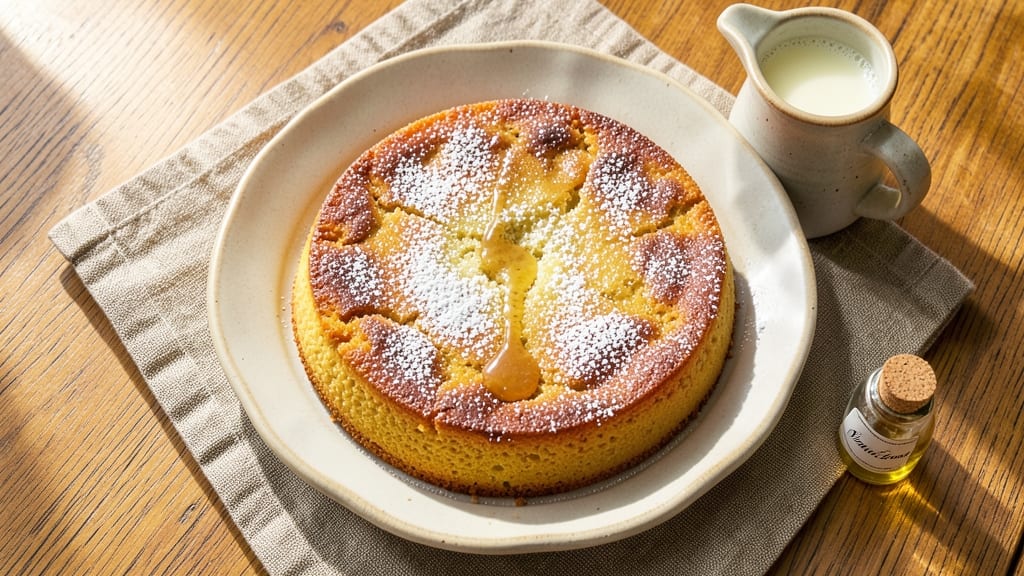
This mung bean cake recipe delivers layers of soft, moist texture with a subtle nutty depth that keeps you reaching for seconds. The secret lies in blending ground mung beans with just enough sweetness to enhance their natural earthiness, creating a dessert that's both comforting and sophisticated.
I developed this version after testing traditional recipes and modern adaptations to find the perfect balance between chewy layers and tender crumb.
What sets this cake apart is its versatility—it works equally well as a classic Asian-style treat or a modern twist with chocolate or matcha swirls. The recipe uses simple ingredients you likely already have on hand, yet transforms them into something restaurant-quality.
Baking time is minimal, and the result is a cake that stays moist for days, making it ideal for meal prep or special occasions.
The texture is the star here: soft, slightly chewy layers that melt in your mouth while maintaining structure. A light dusting of powdered sugar or drizzle of coconut syrup elevates the presentation without overpowering the natural bean flavor.
Perfect for breakfast, dessert, or even a midday pick-me-up, this cake proves plant-based desserts can be indulgent yet balanced.
Whether you're following traditional methods or experimenting with gluten-free flours, this recipe adapts seamlessly. The instructions walk you through every step—from blending the batter to achieving that signature layered texture. Let's get baking!
Ingredients for mung bean cake
Simple pantry staples transform into a restaurant-quality mung bean cake with layers of soft, nutty depth.
| Ingredient | Amount | Notes |
|---|---|---|
| Ground Mung Beans 🌱 | 2 cups | Finely ground for smooth texture |
| Granulated Sugar 🍬 | 1 cup | Light brown preferred for depth |
| Unsweetened Almond Milk 🥛 | 1 ½ cups | Cold for proper blending |
| Coconut Oil (Melted) 🫒 | ½ cup | Refined for neutral flavor |
| Vanilla Extract 🌸 | 1 tbsp | Pure Madagascar vanilla preferred |
| Baking Powder 🍞 | 1 tsp | Aluminum-free for best rise |
| Salt 🧂 | ½ tsp | Fine sea salt preferred |
| Powdered Sugar 🍬 | ¼ cup | For dusting and garnish |
| Coconut Flakes 🥥 | ¼ cup | Toasted for extra crunch |
| Matcha Powder 🍵 | 1 tbsp | Ceremonial grade preferred |
| Dark Chocolate Chips 🍫 | ½ cup | Vegan, 70% cocoa |
| Lemon Zest 🍋 | 1 tbsp | Freshly grated for brightness |
| Ground Flaxseed 🌾 | 1 tbsp | Mixed with water for binder |
The ground mung beans are the heart of this cake, so buy them pre-ground from an Asian market if possible—they're finer and more consistent than what you'll get grinding whole beans at home. Bob's Red Mill sells a great organic version if you can't find specialty stores. For the matcha, Ippodo Tea or Jade Leaf carry ceremonial-grade powder that won't taste bitter. The coconut oil needs to be refined—not the virgin kind—so it doesn't add coconut flavor. Toast your coconut flakes in a dry pan for 2 minutes before adding them for extra aroma.
No matcha? Instant espresso powder at half the amount gives a similar earthy note. Running short on coconut oil? Avocado oil or melted coconut butter work in a pinch, though texture may vary slightly. The flax binder can be swapped for 1 tbsp chia seeds mixed with 3 tbsp water. For the chocolate chips, Enjoy Life brand is my go-to for vegan baking—no weird aftertaste. The lemon zest is non-negotiable though; it cuts through the richness and brightens every bite. If you can't find fresh lemons, bottled zest works but lacks the same punch
This cake stays moist for 5 days covered at room temperature or 1 week refrigerated. For make-ahead prep, bake the layers, let cool completely, then freeze between parchment paper—thaw at room temp before assembling. The powdered sugar dusting keeps best in a sealed container for 2 weeks. I like to portion the batter into greased mini loaf pans for easy individual servings—great for breakfast or dessert bars.
Why You'll Love This Recipe
- No-Fuss Mixing: I swear by the 5-minute stir—just ground mung beans, sugar, almond milk, and a splash of vanilla. No eggs, no waiting for dough to rise, just blend and bake. Honestly, the hardest part is deciding whether to use a hand mixer or do it by hand (I cheat and use a whisk).
- Sweet Creamy Magic: That coconut oil keeps it moist, while the vanilla turns it into something dangerously addictive—like a cross between a cake and a pudding. The sugar caramelizes just enough to give it a subtle depth that makes it taste way more special than it is.
- Breakfast or Dessert: Between us, I’ve had this cold for breakfast with peanut butter and hot for dessert with a drizzle of honey. It’s the kind of recipe that doesn’t care what time it is—just what you’re craving. (Yes, even on a Tuesday night.)
- Pantry Staple Power: Ground mung beans are cheap, almond milk lasts forever, and sugar? Always in the cabinet. I made a whole batch for $3 and still had leftovers for days—no guilt, just pure satisfaction. Plus, it travels well, so I pack slices for work without a second thought.
Step-by-step instructions for mung bean cake
Here's how to create a tender, nutty-sweet cake with perfect moisture—every layer will surprise you.
Create the Flaxseed Egg Substitute
In a small bowl, combine the 1 tablespoon ground flaxseed with 3 tablespoons cold unsweetened almond milk (just enough from the 1.5 cups total). Stir vigorously and let sit for 5 minutes until it thickens into a gel-like consistency—this will replace traditional eggs while keeping the cake wonderfully moist.
Here's the thing—this step is crucial. The flaxseed mixture should resemble a thick pudding when ready. If you're impatient and try to use it before it fully gels, your cake will be dense instead of light. Test by tilting the bowl: the mixture should hold its shape when poured slowly.
Mix Wet Ingredients for Perfect Texture
In a large mixing bowl, whisk together the 2 cups ground mung beans, 1 cup granulated sugar, 1.5 cups unsweetened almond milk, 0.5 cup melted coconut oil, and the flaxseed mixture. The batter should be smooth but slightly thick—like a well-stirred pancake batter. If it looks too thick, add 1 tablespoon more almond milk at a time until it reaches the right consistency.
Add the 1 tablespoon vanilla extract and 1 tablespoon lemon zest, mixing until fully incorporated. The lemon zest will brighten the nutty flavor of the mung beans, while the vanilla adds depth. This is where the cake's signature moistness begins—don't skip the whisking, as it ensures even distribution of all ingredients.
Fold in Dry Ingredients and Mix Gently
In a separate bowl, sift together the 1 teaspoon baking powder, 0.5 teaspoon salt, and 1 tablespoon matcha powder. This combination creates lift while adding that distinctive earthy sweetness. Gently fold these dry ingredients into the wet mixture using a spatula, being careful not to overmix—just until combined. Overmixing develops gluten and can make the cake dense.
Next, fold in the 0.5 cup dark chocolate chips and 0.25 cup coconut flakes by hand. You'll notice the batter becomes slightly thicker and more textured. This is perfect—it means the chocolate and coconut are evenly distributed, ready to create pockets of rich flavor in every bite. The batter should be thick but still pourable.
Bake Until Golden and Springy
Preheat your oven to 350°F and grease two 8-inch round cake pans (or one 9x13-inch pan). Pour the batter evenly into the prepared pans. Bake for 30-35 minutes (for round pans) or 35-40 minutes (for the sheet pan) until a toothpick inserted in the center comes out clean and the edges are golden brown.
Here's the secret to that perfect moist texture: don't overbake. The cake should spring back slightly when pressed in the center—this is your visual cue that it's done. If you pull it out too soon, it'll be undercooked; too late, and it'll dry out. The matcha gives it a beautiful green hue, but the real magic is in that tender crumb.
Cool and Dust for Finishing Touches
Allow the cake to cool in the pans for 10 minutes, then transfer to a wire rack to cool completely. Once fully cooled, dust the top generously with 0.25 cup powdered sugar and sprinkle with the remaining 0.25 cup toasted coconut flakes for a beautiful finish. The powdered sugar adds a delicate sweetness, while the coconut flakes provide a satisfying crunch that contrasts beautifully with the soft cake.
This is where the cake truly shines. The contrast between the moist, nutty layers and the crisp coconut topping creates a texture that's impossible to resist. Serve slices warm or at room temperature, and you'll understand why this cake delivers on its promise of moisture and depth with every bite.
Pro Tips For Making Mung Bean Cake
- Sift the Beans: Run ground mung beans through a fine-mesh sieve before mixing—it breaks up any clumps and guarantees a smoother batter. I learned this the hard way after scraping dried lumps out of my cake pan for the third time.
- Warm the Milk: Heat unsweetened almond milk to 110°F (43°C) before mixing—it dissolves sugar faster and prevents graininess in the final texture. Yes, even if you’re impatient like me, take the 30 seconds.
- Don’t Overmix: Stir just until combined—overworking the batter makes the cake dense and chewy instead of light. I used to whip it like pancake batter, and the result was more brick than cake.
- Grease with Coconut Oil: Brush melted coconut oil and dust the pan with ground mung beans for a nonstick release—no flour needed, and it keeps the cake from sticking like glue. (Your future self will thank you.)
Essential equipment for mung bean cake
Mixing Essentials
You’ll need a stand mixer or hand mixer with a whisk attachment to blend the batter smoothly. I recommend the KitchenAid Artisan Series for its durability and consistent performance, but a budget-friendly Hamilton Beach mixer works too.
For small batches, a hand whisk in a large bowl works—just be prepared for more arm work. 🌱
Precision Baking Tools
An oven thermometer is non-negotiable—many home ovens run 25°F hotter or colder than set. The Thermoworks Oven Thermometer is my go-to for accuracy. Grease your pans with coconut oil spray (like Misto) for easy release.
For even baking, use 8-inch round cake pans or a 9x13-inch sheet pan—both work, but round pans create cleaner layers.
Cooling & Finishing
A wire cooling rack speeds up cooling time and prevents soggy bottoms. I love the OXO Good Grips design for its stability. For dusting, a fine-mesh sieve (like Norpro) ensures even powdered sugar coverage. Toast your coconut flakes in a nonstick skillet—they’ll crisp beautifully without sticking. ✨
Optional Upgrades
For matcha swirls, a piping bag with a small round tip (like Wilton 1M) creates professional-looking veins. A food scale (such as OXO Good Grips) guarantees precise measurements, especially for the ground mung beans—they’re dense and can vary by brand.
For chocolate lovers, vegan dark chocolate chunks melt faster than chips when folded in.
Storage Solutions
Store baked layers in airtight containers (I use Glasslock) to maintain moisture for 5 days. For longer storage, parchment-lined freezer bags work well—just thaw at room temperature before assembling.
A serrated knife (like Mercer Culinary) ensures clean slices, while a pastry brush helps dust powdered sugar evenly. 💡
Nutrition facts
Frequently asked questions
Can I make this mung bean cake without matcha?
Skip the matcha and replace it with 1 tablespoon instant espresso powder for a similar earthy depth, or 1 teaspoon cinnamon for warmth. For a neutral flavor, simply omit it—just reduce the baking powder to ½ teaspoon to maintain lift. The cake will still be delicious with a milder nutty profile.
Why does my mung bean batter look too thick?
Thick batter is normal, but if it's unworkable, add 1 tablespoon almond milk at a time until it reaches a smooth, pourable consistency—like thick pancake batter. Overmixing can also make it dense, so fold dry ingredients gently. The flaxseed mixture must fully gel (5 minutes) before using, or it won't bind properly.
How do I get clean layers in a sheet pan?
For a 9x13-inch pan, bake at 325°F (instead of 350°F) for 40-45 minutes to prevent over-browning. Let it cool completely, then slice with a hot knife (dip in hot water, wipe dry) for clean cuts. For true layers, use round pans and stack them with powdered sugar between layers.
Is this cake gluten-free?
Yes! Ground mung beans are naturally gluten-free, and this recipe uses no wheat-based ingredients. Just ensure your matcha, chocolate chips, and coconut flakes are certified gluten-free. For extra insurance, check baking powder labels—some brands contain wheat starch. The texture remains soft and chewy, just like traditional versions.
Can I make this cake ahead of time?
Bake the layers 1-2 days ahead and store them in an airtight container at room temperature. Assemble with powdered sugar and coconut flakes just before serving. For longer storage, freeze baked layers (up to 3 months)—thaw overnight in the fridge before assembling. The flavors deepen over time!